
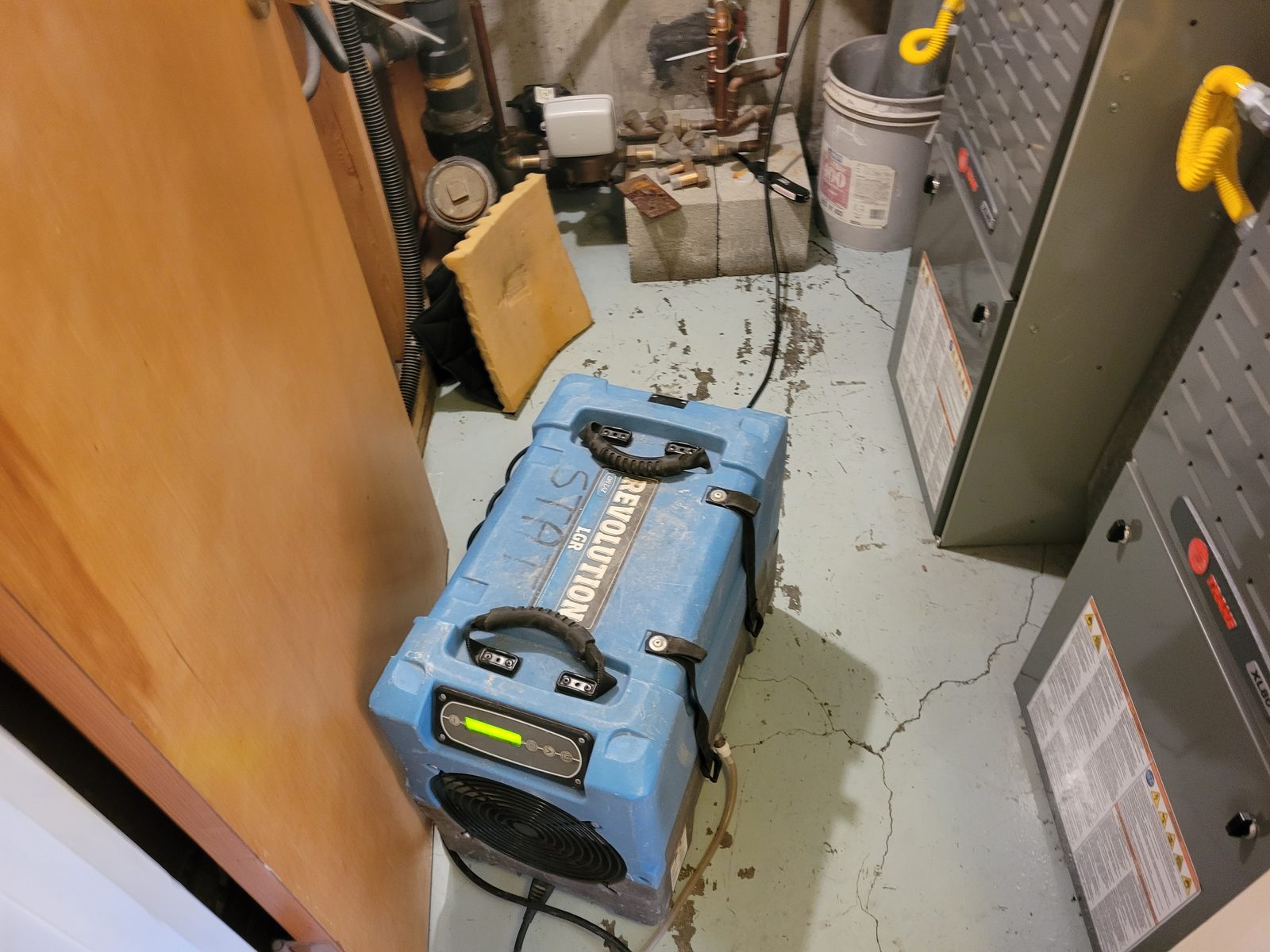
A Northwest Montana cold snap does not treat every pipe the same. The lines that fail first are usually the ones sitting in a cold, lightly heated, or empty part of the house: a crawl space, an exterior wall, a garage, a kitchen sink on an outside wall, a vacant cabin, or a well house. This is a guide to those risk spots, so you know where to look before the temperature drops.
It is not a full prevention checklist, and it is not a first-hour emergency plan. For those, use our guides on how to prevent frozen pipes in Northwest Montana and what to do in the first hour after a pipe bursts. The winterize checklist for homes, rentals, and cabins covers the broader heat and shutdown plan. What follows is where we most often find the weak points.
Crawl spaces
Many Flathead and Northwest Montana homes have water lines running under the floor. A crawl space sits close to frozen ground, and cold air can move through foundation vents, unsealed rim joists, and gaps around pipes. If insulation has sagged, gotten wet, or never covered the full run, a supply line can freeze even when the rooms above feel fine.
Look for exposed or poorly insulated pipes, winter drafts at the rim joist, and damp or missing insulation. A pipe that bursts down there can run for hours — or days, in a house that is not being checked — before anyone sees water upstairs. If water does end up in the crawl space, our crawlspace water cleanup page and how to remove water from a crawlspace post cover what happens next.
Exterior walls
Supply lines hidden in exterior walls, rim joists, and attics are a common freeze point. Plumbing is often run along the cold side of the house to keep it out of the way, which is exactly where wind and a hard freeze hit first.
You may not see the pipe at all. Warning signs are a faucet that suddenly runs slowly or not at all, a cabinet or room that feels much colder than the rest of the house, or frost on a section of pipe you can see. The break often happens when the ice starts to thaw and pressure returns, which is why a quiet freeze can become a flood by morning.
Kitchen and bathroom sinks on outside walls
The cabinet under a sink on an exterior wall is a small, unheated box. A closed door keeps room air away from the supply lines and trap. During a cold snap, that is one of the first places to look.
Open the cabinet and feel for unusually cold pipes or a draft coming in around the plumbing penetration. The prevention guide explains how to give those lines a better chance during a freeze. For now, just know this is a regular weak spot in homes across the valley.
Garages
Attached or detached, a garage is often unheated or only barely heated. Water lines to a laundry tub, a water heater, a hose bib, or a shop sink can sit in that cold air all night. Detached garages and shops are even more exposed, especially if the building is closed up and the heat is off.
Walk the visible plumbing before a forecasted freeze. Note any line that runs along an outside wall, through an uninsulated ceiling, or near a garage door.
Vacant cabins and second homes
An occupied house gives you warning: a cold room, a furnace that is not cycling, a drip. A cabin or second home that sits empty between weekends does not. If the water is still on and the heat is set too low — or the power has gone out — a freeze can go unnoticed until someone arrives to a soaked floor.
If you own a place that sits empty, the winter plan is as much about who checks the house as it is about the plumbing. Someone needs to know where the main shutoff is and what to do if they find a problem. The winterize checklist covers that decision in more detail: keep the heat on and have the place checked, or winterize it properly.
Well pressure tanks and pump houses
A lot of rural Northwest Montana homes are on a well. The pressure tank, pump, and the lines between the well and the house often live in a basement mechanical room, a crawl space, or a separate pump house. Those corners are easy to forget because you do not walk past them every day.
A pump house with a failed heater, an open door, or thin insulation can freeze the tank, the pressure switch, or the line itself. In a basement or utility room, look at piping along foundation walls and any line that runs through a cold rim joist on its way in from outside. If that equipment freezes and then thaws, you can have a leak in a space that already has mechanical and electrical equipment. Treat standing water there as a reason to stay back and call for help.
If you find a problem
If a line looks frozen but has not leaked, do not use an open flame or a torch to thaw it. Shut the water off if you see a crack or any moisture, and get a plumber involved. If a pipe has already burst, follow the first-hour steps and call for frozen pipe restoration so the water in the walls, floors, and insulation gets extracted and dried, not just mopped up. Structural drying is a separate step from pulling the puddle.
Stat Restoration is on call 24/7 for water damage across the Flathead Valley and Northwest Montana. We can usually be on site in about 60 minutes in the Flathead area; outlying towns like Eureka take longer, and we will give you an honest arrival time when you call. For water removal and drying, call (406) 752-8040.
