
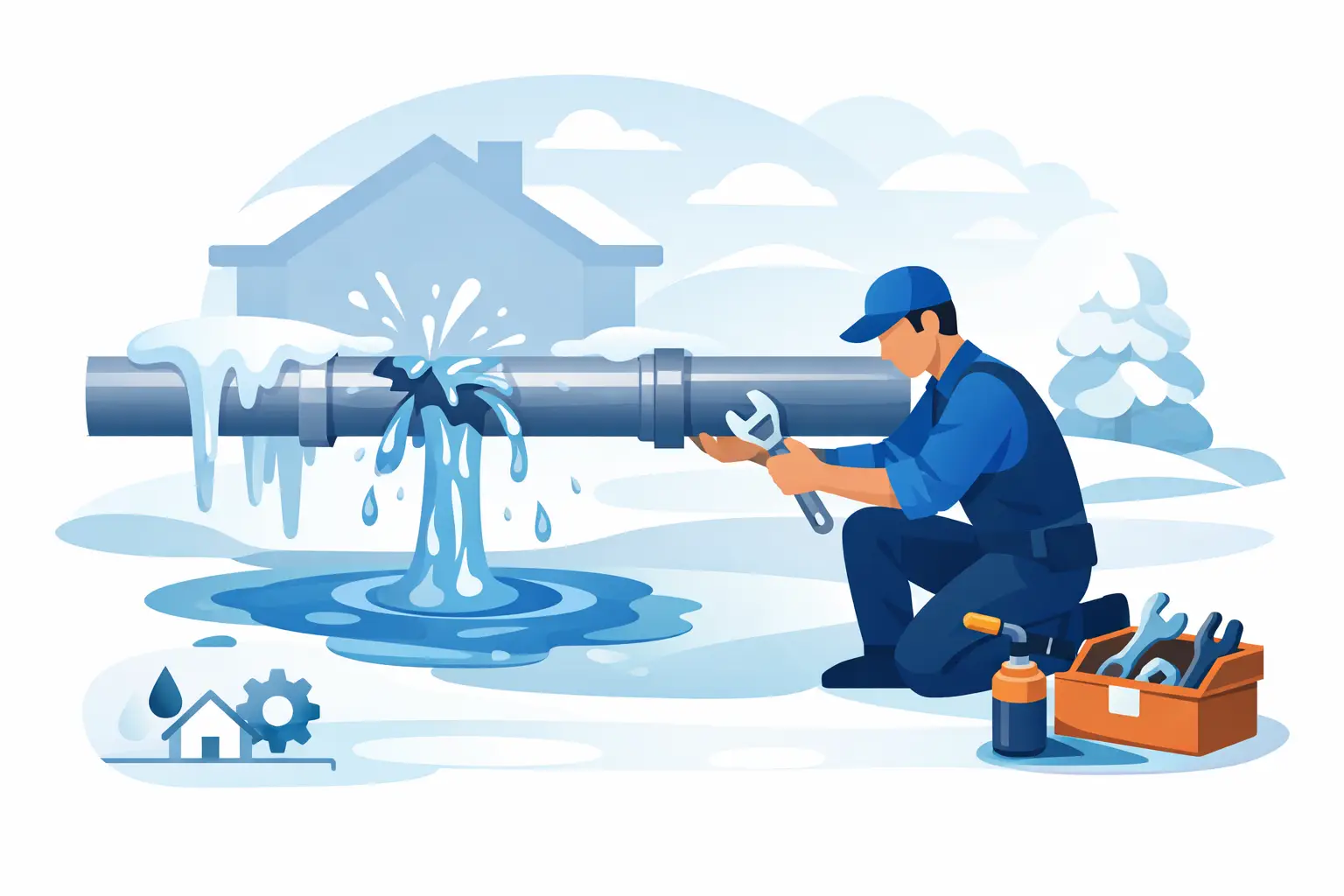
A frozen pipe can turn into a major water loss within minutes. Frozen pipe restoration is not simply about thawing plumbing or replacing a broken section of pipe. It is the process of stopping the water, locating every affected area, removing moisture from building materials, and restoring your property before mold, rot, or structural damage takes hold.
In Northwest Montana, a burst pipe may release water into wall cavities, crawlspaces, attics, finished basements, and under flooring long before the visible puddle tells the full story. Fast action protects the property, the people inside it, and the documentation needed for an insurance claim.
What to Do When a Frozen Pipe Bursts
Your first priority is to stop the flow of water. Shut off the home’s main water supply if you can safely access it. If the leak is isolated to a fixture or appliance line, the local shutoff valve may be enough, but do not spend valuable time searching for it while water is actively spreading.
Take these immediate steps while help is on the way:
- Turn off the water supply and avoid using sinks, toilets, appliances, or other plumbing fixtures.
- Turn off electricity to affected areas only if it is safe to do so. Do not enter standing water near outlets, appliances, electrical panels, or damaged wiring.
- Move rugs, furniture, electronics, inventory, and personal belongings out of the wet area when possible.
- Take photos and short videos of the pipe, the water source, and damaged materials before cleanup begins.
Do not use an open flame, torch, or high-heat device to thaw a pipe. Excessive heat can damage pipe materials, ignite nearby building materials, or create pressure changes that worsen an existing crack. If the pipe has not burst and you can access it safely, gentle, controlled warming may be appropriate. If there is any active leak, visible water damage, or uncertainty about where water has traveled, treat it as a restoration emergency.
Why Frozen Pipe Restoration Requires More Than Plumbing Repair
A plumber can repair or replace the failed pipe. That repair is essential, but it does not address water that has already migrated behind drywall, beneath cabinets, into insulation, or under flooring. Restoration begins where plumbing repair ends.
Water follows gravity, but it also travels laterally through framing, insulation, subfloors, and gaps around utility lines. A small break in an upstairs supply line can wet a ceiling below, then continue into wall cavities and flooring on another level. By the time surfaces feel dry, moisture may still be trapped where it can damage materials and support mold growth.
The correct scope depends on the source, how long the water ran, and what materials were affected. Clean water from a broken supply pipe may initially be categorized differently than water from a failed drain line or backed-up sewage system. However, clean water that sits too long or contacts contaminated building materials can become a more serious health and cleanup concern. That is why prompt extraction and controlled drying matter.
The Professional Frozen Pipe Restoration Process
A qualified restoration team starts by controlling the loss and documenting conditions. At Stat Restoration, IICRC-certified technicians use moisture meters and thermal imaging to identify wet materials beyond the visible damage. This inspection provides a factual drying plan rather than relying on guesswork or surface appearance.
Containment and water removal
If water is still entering the structure, the source must be shut off or repaired before drying equipment can do its job. Technicians then remove standing water with professional extraction equipment. Fast extraction reduces the amount of water absorbed by carpet padding, wood flooring, drywall, insulation, and framing.
In some cases, materials can be dried in place. In others, saturated insulation, damaged baseboards, carpet padding, or sections of drywall need to be removed so the structure can dry properly. The decision should be based on moisture readings, material condition, contamination risk, and the ability to dry the assembly – not on whether removal is convenient.
Drying hidden moisture
After extraction, air movers and commercial dehumidifiers create controlled airflow and remove water vapor from the air. This is not the same as opening windows or running household fans. Montana winter air can be cold, and uncontrolled ventilation may create additional problems rather than achieving stable drying conditions.
Technicians monitor moisture content in structural materials throughout the process. Drying is complete when affected materials meet an acceptable dry standard, not when a room merely feels less damp. This verification is critical for preventing concealed moisture from becoming a mold problem weeks later.
Cleaning, repair, and restoration
Once the structure is dry, the restoration phase addresses damaged finishes and contents. That may include cleaning and deodorizing, replacing drywall and insulation, repairing flooring, repainting, rebuilding cabinets, or restoring affected commercial spaces.
Not every loss requires extensive reconstruction. A quickly discovered pipe break on a hard-surface floor may need extraction and targeted drying only. A pipe that burst overnight in an unoccupied rental, however, may require significant demolition and rebuild work. The goal is to preserve salvageable materials while removing anything that cannot be safely dried or restored.
Documentation Matters for Insurance Claims
A burst pipe creates two urgent jobs: protect the property and establish a clear record of the loss. Photos from the first hours are useful, but insurers also need organized documentation of affected areas, moisture conditions, equipment placement, cleaning steps, and necessary repairs.
Professional restoration documentation helps show why a wall, floor, or ceiling needed attention even if the damage was not obvious from the room. It also helps distinguish emergency mitigation from later reconstruction work. Coverage depends on the policy and the circumstances of the loss, particularly if a vacant property, inadequate heat, or maintenance issue is involved. No restoration contractor can promise a coverage decision, but accurate records reduce avoidable confusion and delays.
For landlords and property managers, documentation also helps establish what occurred, when tenants or staff reported the loss, what emergency steps were taken, and when the property became safe for occupancy. That level of control is especially valuable when a frozen pipe affects multiple units or business operations.
Common Mistakes That Make Pipe Damage Worse
The most costly mistake is waiting to see whether materials will dry on their own. Wet drywall, insulation, laminate flooring, and subflooring often hold moisture longer than expected. The delay can turn a manageable water loss into a mold remediation or reconstruction project.
Another mistake is placing a few household fans in a wet room without removing standing water or checking moisture behind surfaces. Fans may dry the top layer while pushing humid air into other areas. They also cannot confirm whether a wall cavity, cabinet base, or flooring system is dry.
Property owners should also avoid discarding damaged materials before documenting them, unless an immediate safety hazard requires removal. Keep photos, save receipts for emergency expenses, and record conversations related to the loss. These simple steps can make the claim process easier later.
When to Call for Emergency Help
Call for professional help immediately when a pipe has burst, water has reached finished materials, a ceiling is sagging, flooring is buckling, or you cannot confirm the full extent of moisture. The same applies when the property has been vacant, the leak may have run for hours, or electrical components could be involved.
A fast response is especially important during prolonged cold weather in Kalispell, Whitefish, Columbia Falls, Eureka, Libby, and throughout Flathead and Lincoln counties. Frozen plumbing often fails when roads are difficult, properties are unoccupied, and temperatures make temporary solutions unreliable.
If you have stopped the water, you have taken the first critical step. The next step is making sure the damage you cannot see does not become the problem you live with later.
