
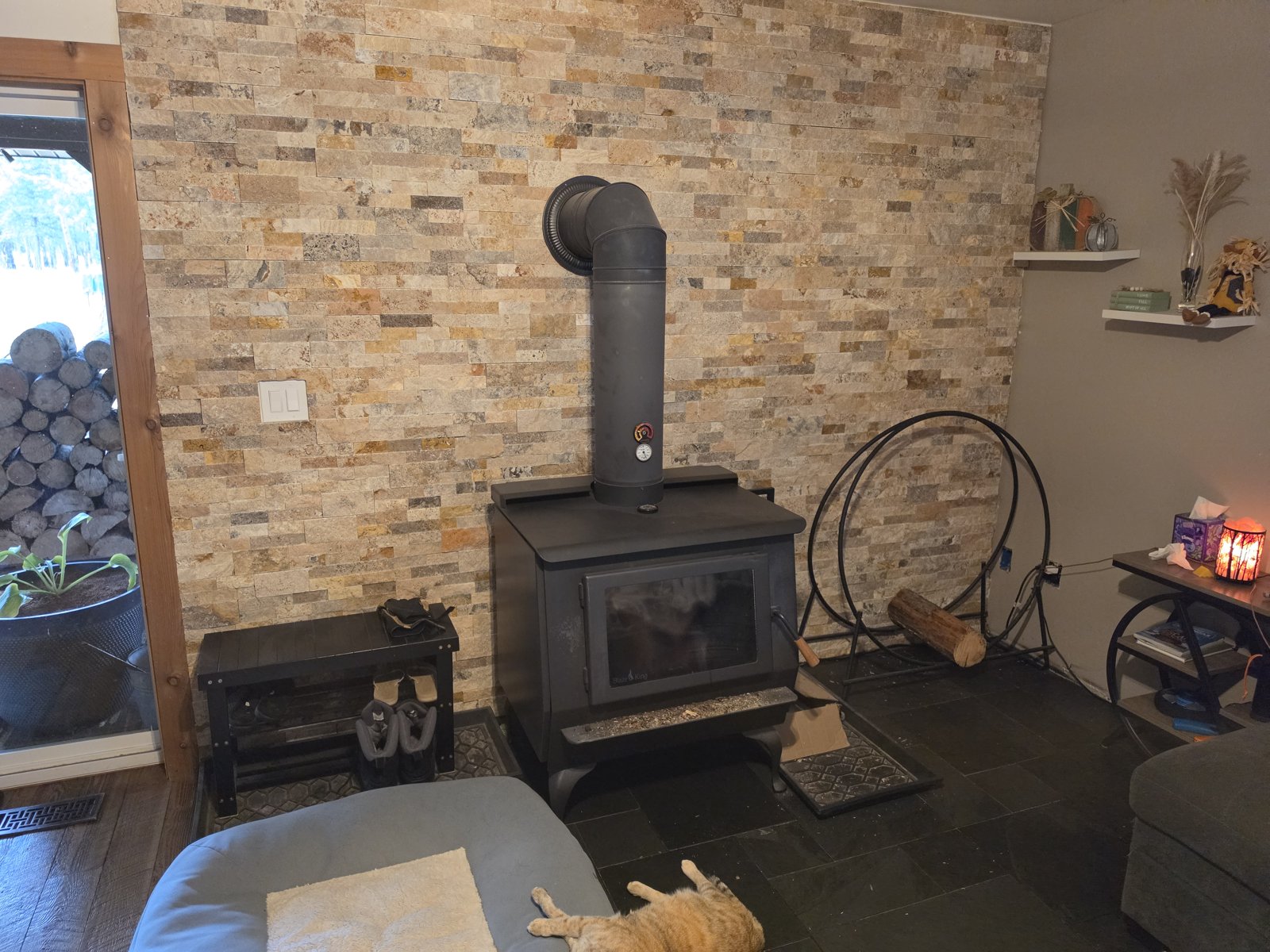
If you heat with wood in Northwest Montana, you know the routine: split, stack, burn, repeat, from October well into spring. Furnaces put in long hours too, especially when a January cold snap settles over the Flathead. A long season gives creosote time to build up in a chimney and puts real wear on an aging furnace.
When something goes wrong, it happens fast: a roaring chimney fire, or a furnace that misfires and puffs soot through the house. Here’s what to do once the danger is over, what hidden damage to look for, and how to prevent it.
Safety First: An Active Chimney Fire Is a 911 Call
If you hear a loud roaring or rumbling from the stovepipe or chimney, see flames or sparks coming out the top, or notice the pipe glowing or the wall around it getting hot, treat it as an active fire. Get everyone out of the house and call 911 from outside. Don’t climb on the roof, and don’t pour water down a hot chimney.
The same goes for a furnace that smells strongly of fuel, a carbon monoxide alarm going off, or flames anywhere they shouldn’t be. Get out first, then call 911 or your fuel or gas utility.
Stat Restoration is not an emergency fire service. We come in after the fire department has done its job and the house is safe to enter.
What Is a Furnace Puffback?
A puffback happens when a furnace doesn’t light cleanly. Unburned fuel collects in the combustion chamber, then ignites all at once, pushing soot and smoke out through the burner, flue connections and often the ductwork. It’s most common with oil furnaces, but gas and propane units can have ignition problems too. Sometimes it’s one loud bang. Other times a furnace puffs small amounts of soot for weeks before you notice black webs in the corners or a gray film on the walls.
What to Do After a Chimney Fire or Puffback: The First Hour and First Day
Once the house is safe, these steps decide how much can be cleaned and how much ends up replaced.
Turn off the furnace. Use the thermostat and the service switch (it usually looks like a light switch on or near the furnace). Every time the blower runs, it pulls soot through the ducts and pushes it into more rooms. Leave it off until an HVAC technician has checked it.
Don’t use the stove or fireplace again until a qualified chimney professional has inspected it. The Chimney Safety Institute of America notes that a chimney fire can crack flue tiles, break down mortar joints or warp metal liners, and that damage often can’t be seen from the top or bottom of the chimney.
Don’t wipe the soot. Soot is fine, oily and smears easily. A damp rag or all-purpose cleaner pushes it into paint, drywall texture and wood grain, turning a light film into a stain. Leave walls, ceilings, lampshades and upholstery alone.
Skip the household vacuum and ceiling fans. Both can blow fine soot back into the air.
Ventilate gently if the weather allows. Cracking a couple of windows helps with odor, but in a Montana winter keep it short and don’t let the house get cold enough to freeze pipes. Our winterizing checklist covers how to keep plumbing safe when the heat is off.
Protect people and pets. Keep anyone with asthma or breathing problems, and pets, out of affected rooms.
Take photos before anything is cleaned or thrown out. Get every affected room, close-ups of walls, vents and furniture, the stove or furnace, and the chimney from the ground. Keep any fire department report. We walk through this in more detail in how to document fire damage.
Call your insurance company and a restoration company. Coverage depends on your policy and what caused the loss, so ask your agent or adjuster. Stat works directly with insurance companies.
Signs of Hidden Smoke and Soot Damage
Smoke and soot travel farther than most people expect. Look for:
- Soot webs: black, stringy strands in ceiling corners that look like old cobwebs.
- Gray or black shadowing around supply vents and return grilles, and along the edges of carpet next to walls.
- A film on windows, light fixtures and the tops of door frames.
- A smoky or oily smell that returns every time the heat kicks on, which usually means soot in the ductwork.
- Odor in soft goods like bedding, closet clothes, curtains and couches, even in far rooms.
- Discoloration in the attic or around the chimney chase after a chimney fire.
Why Professional Soot and Smoke Cleanup Matters
Soot from wood and oil is oily and acidic. Left in place, it keeps discoloring paint, grout, countertops and metal finishes. Smoke particles work into drywall, insulation, ductwork and fabric, which is why the smell often returns after a surface wipe-down. Dry soot, oily soot and smoke film each need a different method, and the wrong product can set a stain for good. If the ducts aren’t cleaned, the furnace spreads odor and residue every time it runs for the rest of the winter.
Here’s what our fire damage restoration and smoke damage cleanup teams do, at a high level:
- Inspect and document how far the smoke and soot traveled, room by room.
- Contain affected areas so cleaning one room doesn’t spread soot into another.
- Remove soot with dry cleaning methods first, then the right cleaners for each surface.
- Clean contents, from dishes to clothing and soft goods.
- Address odor at the source, including the HVAC system and ductwork, instead of covering it up.
- Work with your insurance company and keep records of the work.
For more on the cleaning side, see our posts on soot cleanup after a house fire and how to remove smoke smell after fire damage. If rebuilding is needed after cleanup, our sister company, All American Builders, handles rebuilds.
Prevention: Before the Next Cold Snap
The U.S. Fire Administration reports that heating was the second leading cause of home fires in 2021. A few habits go a long way:
- Have your chimney inspected and swept every year, before heating season. If you burn heavily, ask your sweep about a mid-season check.
- Burn dry, seasoned wood and avoid long, smoldering, low-air burns. Both build creosote fast.
- Get your furnace serviced before winter, especially an oil furnace. Call a technician if it bangs or rumbles when it lights or leaves soot around the burner door.
- Keep anything that can burn at least 3 feet from stoves and fireplaces, and test your smoke and carbon monoxide alarms.
Frequently Asked Questions
What should I do after a chimney fire is out?
Keep the stove out of use, turn off the furnace if smoke reached the house, don’t wipe soot, and take photos. Have a qualified chimney professional inspect the flue before you light another fire, and call your insurer and a restoration company.
Can I clean up furnace puffback soot myself?
A light film on one hard surface might clean up, but puffback soot is oily and smears into paint and fabric, and DIY cleaning doesn’t reach the ductwork. For anything beyond a small spot, call a professional.
Is it safe to stay in the house after a puffback?
It depends on how much soot spread and who lives there. Keep the furnace off and people with breathing problems away. If you smell fuel or a CO alarm sounds, leave and call 911 or your fuel company.
Does homeowners insurance cover a chimney fire or puffback?
It depends on your policy and the cause of the loss, so talk to your agent or adjuster. Photos, any fire department report and a chimney or furnace inspection report all help.
How long does smoke smell last after a chimney fire?
Without proper cleaning, it can linger for months and return whenever the heat runs. Removing residue from surfaces, contents and ductwork is what gets rid of it.
How often should I have my chimney swept?
The U.S. Fire Administration recommends an inspection and cleaning every year. If wood is your main heat, ask your sweep whether you need more.
Smoke or Soot in Your Home? Call Stat Restoration.
Stat Restoration is locally owned and IICRC certified, with more than 30 years in business. We’re based in Kalispell and serve Northwest Montana, including Whitefish, Columbia Falls, Bigfork, Eureka, Libby, Troy, Polson and Thompson Falls.
If a chimney fire or puffback has left soot or smoke odor in your home, leave the soot alone, keep the furnace off and call us. We’re available 24/7 at (406) 752-8040.
