
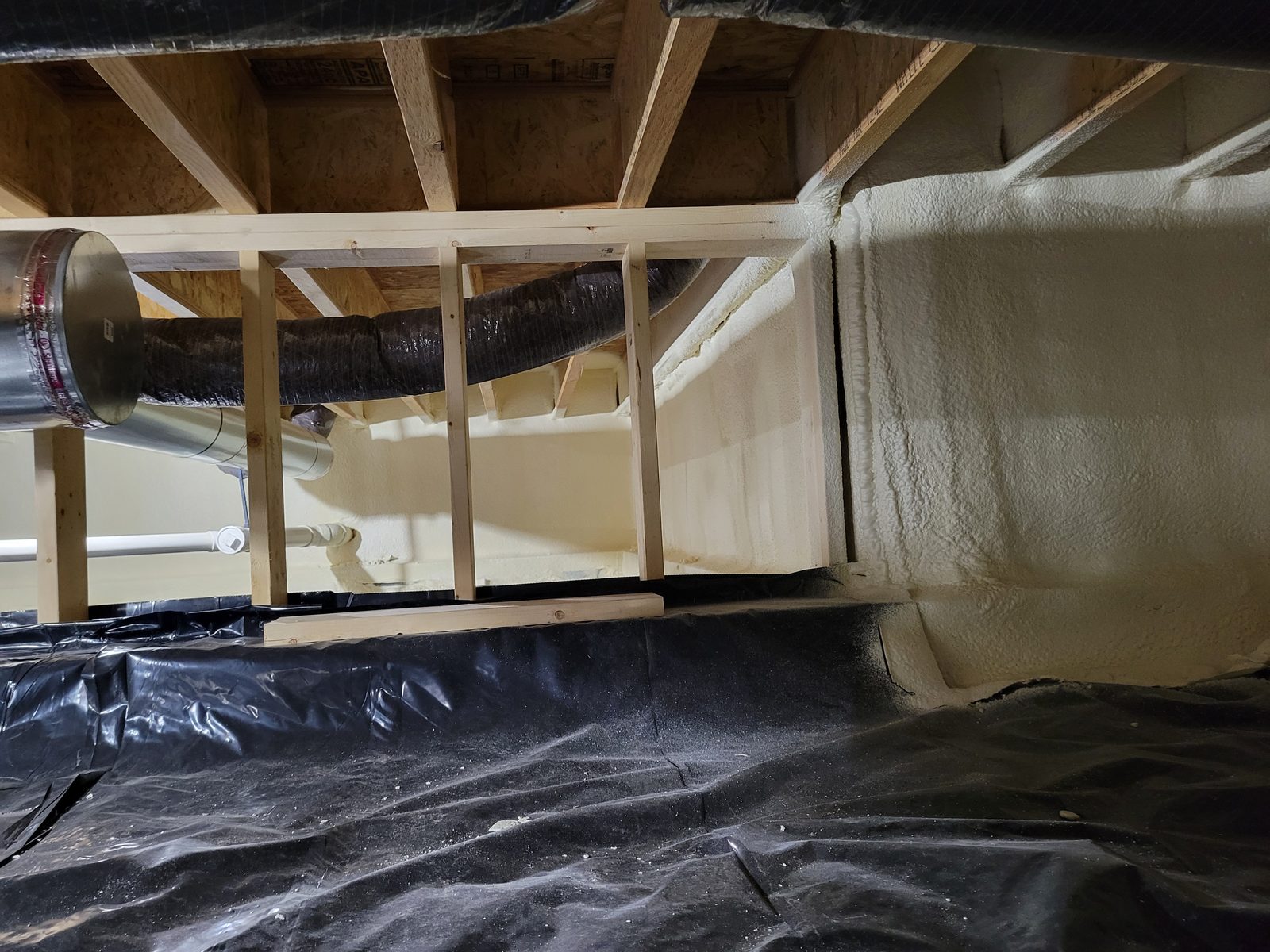
Water under a home is easy to ignore until the floors feel cold, the air smells musty, or a small plumbing leak becomes structural damage. To remove water from a crawlspace safely, you need to stop the source, protect yourself from electrical and contamination hazards, extract standing water, and dry materials below the home – not just make the puddle disappear.
In Northwest Montana, crawlspace water can follow spring runoff, frozen-pipe failures, heavy rain, drainage problems, and slow supply-line leaks. The visible water is only part of the loss. Moisture can soak insulation, framing, subflooring, ductwork, and vapor barriers, creating conditions for mold and wood deterioration.
Around Kalispell and the Flathead Valley, crawlspace water usually shows up after a frozen pipe lets go in January or when spring snowmelt pushes groundwater up against the foundation.
First, decide whether it is safe to enter
Do not climb into a flooded crawlspace simply to inspect it. Standing water near electrical wiring, a furnace, an outlet, or damaged equipment can create a serious shock hazard. If the source may be sewage, the water has an unusual odor or color, or you see animal waste, assume it is contaminated and keep people and pets away.
Before anyone enters, shut off electricity to the affected area if it can be done without approaching water. Turn off the water supply if a broken pipe or appliance line is still feeding the problem. If you cannot safely identify the source or reach the shutoff, call for emergency help rather than taking chances in a confined space.
A crawlspace can also have poor air quality, limited exits, sharp debris, and unstable wet surfaces. Professional crews use appropriate protective equipment, moisture monitoring, and controlled drying methods because this is not a normal cleanup area.
How to remove water from a crawlspace
The right approach depends on the amount of water, how long it has been present, and where it came from. A few inches of clean water from a newly discovered supply-line leak may be manageable with proper equipment. Water that has sat for days, came through the ground, or contacted sewage needs a more controlled response.
Stop the water at its source
Extraction cannot succeed if water is still entering the space. Look for an active pipe leak, a failed water heater connection, a damaged exterior hose bib, overflowing gutters, blocked downspouts, or surface water draining toward the foundation.
For plumbing failures, shut off the home’s main water valve and contact a qualified plumber as needed. For rain or groundwater intrusion, temporary pumping may be necessary, but the permanent solution usually involves correcting drainage, grading, gutter discharge, foundation entry points, or sump system performance.
Extract standing water completely
For shallow, clean-water situations, a wet/dry vacuum or portable utility pump can help remove water. Never use a standard household vacuum. Start at the lowest area and discharge water well away from the foundation so it does not return to the crawlspace.
Large losses require more than consumer equipment. Restoration-grade extractors move water quickly, while submersible pumps handle deeper standing water. The goal is not merely to lower the water level. It is to remove as much liquid water as possible before drying begins, limiting the time materials remain saturated.
Do not assume a dirt-floor crawlspace is dry because you cannot see a puddle. Soil can hold significant moisture, and water may collect beneath insulation or in low pockets hidden by a vapor barrier.
Remove wet materials that cannot dry correctly
Wet fiberglass insulation often loses its shape, holds moisture against wood, and may need to be removed. Saturated cardboard, debris, damaged vapor barrier, and other porous materials can also prevent effective drying. Not sure what is wet? Here is how to identify wet insulation, and why crawlspace moisture and vapor barriers matter before winter. Materials should be assessed carefully before disposal, especially if the water source was contaminated.
Wood framing and subflooring can often be dried if addressed promptly. That requires air movement, dehumidification, and moisture measurements – not guesswork. Closing the crawlspace and hoping it dries on its own can trap humidity where it does the most damage.
Dry the structure, not just the air
Fans alone are rarely enough in a crawlspace. They can move humid air around without removing moisture from the structure. Professional drying typically pairs air movers with commercial dehumidifiers sized for the affected area and conditions. Technicians monitor humidity, temperature, and material moisture content throughout the process.
Thermal imaging and moisture meters help locate wet framing, insulation, and subfloor areas that are not visible from the access opening. This matters because mold can begin growing on wet organic materials within 24 to 48 hours under favorable conditions.
When a sump pump helps – and when it does not
A sump pump can be an effective long-term tool for crawlspaces that regularly collect groundwater. It gathers water in a basin and pumps it outside through a discharge line. However, it is not a substitute for fixing a broken pipe or correcting surface drainage.
If a sump pump failed during a storm, first confirm that power is available and the discharge line is not frozen, clogged, or sending water back toward the home. In Montana winters, freeze protection and discharge placement deserve special attention. A pump that works perfectly in mild weather can fail when its line freezes, and preventing frozen pipes is just as important.
A battery backup can add protection during outages, but the system still needs routine testing. If water returns after each storm, a contractor should evaluate the drainage path, foundation conditions, and whether the pump capacity matches the volume of water entering the space.
Watch for hidden damage after the water is gone
A crawlspace may look dry at the access door while moisture remains in materials above it. Pay attention to musty odors, damp insulation, cupped or soft flooring, elevated indoor humidity, peeling finishes, or recurring condensation on windows. These can point to unresolved moisture below the home.
Mold is another concern, particularly where wet insulation or wood framing was left in place. Do not cover odor or visible growth with bleach, fragrance, or new insulation. The moisture source and affected materials must be addressed first. Otherwise, the problem often returns behind a vapor barrier or beneath flooring.
For rental properties and commercial buildings, prompt documentation also matters. Photos of the source, affected areas, and damaged contents can support the insurance process. Keep receipts for emergency mitigation where applicable, but avoid discarding damaged materials until they have been documented and your carrier provides direction.
When to call a crawlspace water removal professional
Call for professional help when water is more than a small, recent clean-water spill, when electricity may be involved, or when the source is unknown. You should also bring in trained restoration technicians if water came from sewage, a storm event, a burst pipe that ran for hours, or if insulation, flooring, or framing is wet.
Stat Restoration provides 24/7 emergency response across Northwest Montana, including crawlspace water cleanup. IICRC-certified technicians can assess the water source, contain the loss, extract standing water, locate hidden moisture with professional equipment, and set up a documented drying plan. The team also communicates directly with insurance carriers, helping reduce the administrative load while the property is being stabilized.
For active water damage, call (406) 752-8040. Fast extraction and measured drying give your crawlspace, floors, and indoor air the best chance of returning to normal without a larger repair later.
The useful next step is simple: once the water is stopped, do not wait for a musty smell to tell you the crawlspace is still wet. Verify that the materials beneath your home are actually dry.
Water in your crawlspace? Call Stat Restoration at (406) 752-8040 to talk through next steps.
