
A pipe that freezes during a Northwest Montana cold snap often fails when the ice melts and pressure returns—not while everything is still solid. One minute the house is quiet; the next, water is running through a wall, crawl space, cabinet, or finished floor. Your job in the first hour is simple: stop the water if you can do it safely, keep people clear of hazards, and get the right help on the way.
This is not a prevention guide. For how to keep pipes from freezing in the first place, see How to Prevent Frozen Pipes in Northwest Montana. What follows is what to do once a line has already burst.
Your first-hour action plan
1. Find and shut the main water valve
Shutting off the main supply stops new water from feeding the break. In Flathead-area homes the valve is most often:
- In the basement, near where the water line enters the foundation
- In a crawl space, usually at the entry end of the water service
- In a utility room, mechanical room, or near the water heater or pressure tank
- Sometimes at a meter pit or curb stop outside (use only if you know how and it is safe to access in ice and snow)
Turn the valve clockwise (or follow the handle marking) until the flow stops. If you cannot find it quickly, or you would have to crawl through standing water to reach it, do not force the issue—call for help and keep people out of the wet area.
Know where that shutoff is before the next cold snap. A vacant cabin or second home is especially hard when nobody on site has ever seen the valve.
2. Shut off the water heater when it makes sense
Once the main water is off, consider the water heater:
- For a conventional tank heater, turning it to “pilot” or off (or shutting the breaker for an electric unit) helps avoid dry-firing or stress if the tank cannot refill.
- If you cannot reach the heater controls without walking through water or touching wet equipment, leave it alone and tell the plumber and restoration crew.
Do not drain the heater yourself unless a plumber has told you to. The priority is stopping the active leak and staying safe.
3. Treat electrical hazards as a hard stop
Do not enter standing water near outlets, power strips, appliances, or the electrical panel. Do not flip breakers or unplug equipment from inside a wet area. Never touch a wet panel.
If water is near the panel or you see sparking, smell burning, or someone has been shocked, call 911. Otherwise keep everyone out until a qualified person says the area is safe to enter.
4. Open faucets to relieve pressure and drain lines
With the main shut off, open a few faucets (hot and cold) on the lowest levels and at fixtures you can reach from dry ground. That helps drain remaining water out of the lines and can reduce pressure at the break.
You do not need to open every faucet in the house. Skip any fixture you would have to cross water to reach.
5. Move belongings out of the water path—only if it is safe
From dry flooring, move furniture, boxes, electronics, and keepsakes away from the wet area. Do not salvage items by wading through water, and do not drag soaked carpet or open walls on your own.
Water from a burst supply line can travel farther than the puddle you see—under flooring, behind baseboards, into insulation, and down into a crawl space. Leave invasive cleanup for the crew with the right equipment.
6. Take photos for your records
If you can do it from a dry spot, photograph:
- The wet rooms and the path the water took
- The area around the broken pipe, if visible and safe
- Affected contents and flooring
Note the time you discovered the leak and when you shut the water off. Coverage depends on your policy and the cause of the loss; clear photos and a short timeline help you talk with your insurer later. That is documentation, not a promise about what will be covered.
7. Call a plumber for the pipe—and Stat for the water
These are two different jobs:
- A plumber finds and repairs (or replaces) the failed pipe and gets the plumbing system back in service when it is safe.
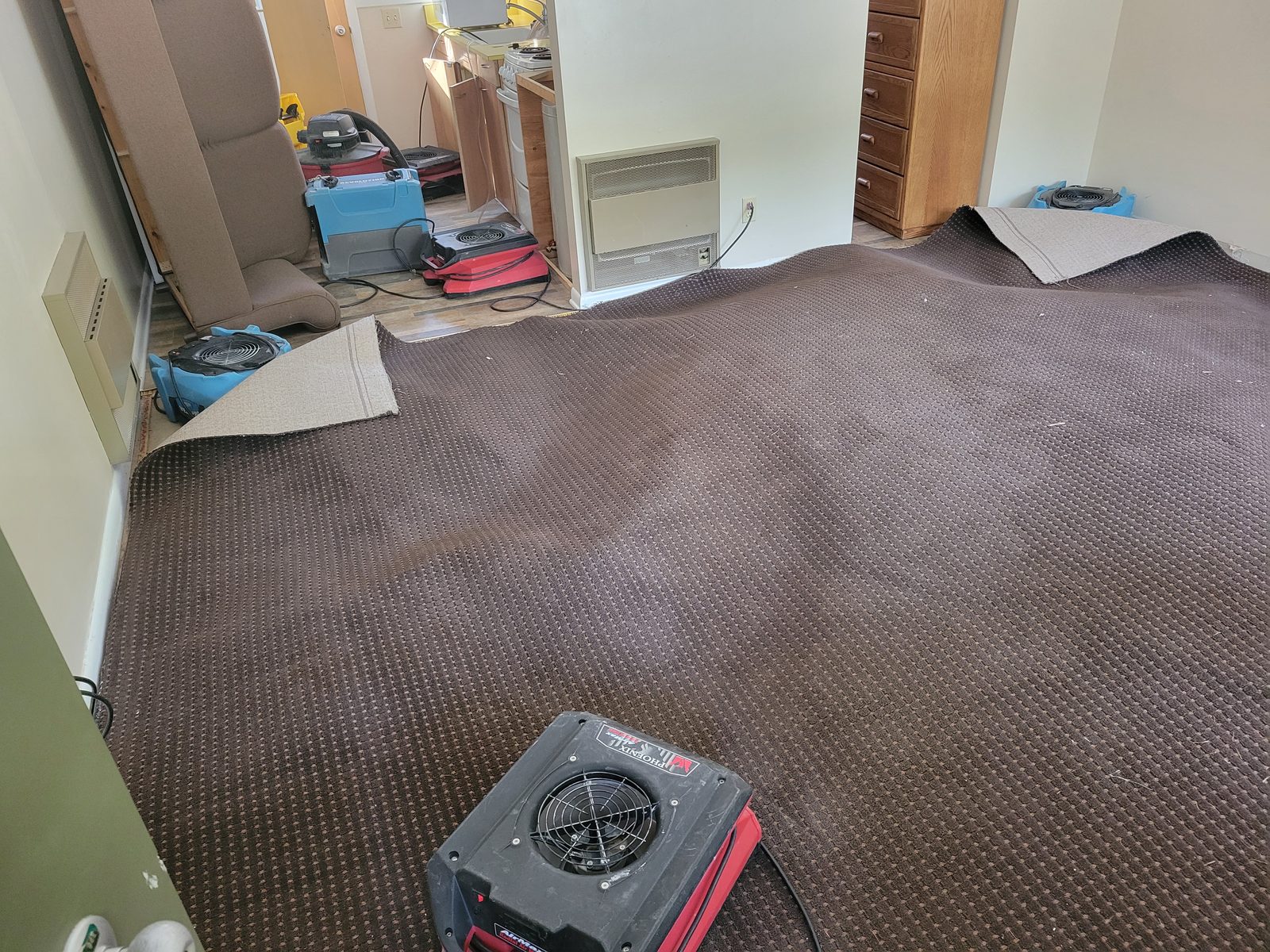
- Stat Restoration removes standing water, maps moisture in walls, floors, and insulation, and runs structural drying so hidden wet materials do not sit for days.
You can call both while water is still an issue. Waiting for the repair to finish before starting extraction often means more water in the building. Stat’s response is usually about an hour in the Flathead area; outlying towns like Eureka take longer.
For water removal and drying in and around Kalispell and the wider valley, start with Stat’s Kalispell location page or call the number at the end of this post.
Why the first hours matter
Mold can begin on wet building materials within about 24 to 48 hours under typical indoor conditions. Cooler Montana rooms may slow that a bit, but they do not remove the risk—especially in closed-up winter houses.
The water you mop up is only part of the story. Moisture hides in:
- Wall cavities and exterior-wall framing (common freeze points)
- Subfloors and carpet padding
- Insulation in ceilings, walls, and crawl spaces
- Cabinets, toe-kicks, and rim-joist areas
That is why extraction and structural drying are separate steps. Pulling the puddle is not the same as drying the structure. Our guide on water extraction versus structural drying explains the difference, and how to identify wet insulation covers what to watch for behind walls and ceilings.
Cold-snap problems we see in Flathead homes
Hard freezes hit pipes in crawl spaces, garages, and exterior walls hardest. Vacant cabins and second homes add another risk: a freeze can go unnoticed for hours or days until someone arrives and finds a soaked floor. Older homes with thin insulation, air leaks at rim joists, or poorly heated utility rooms are frequent trouble spots when temperatures drop and stay there.
If you manage rentals or own a place that sits empty between visits, treat a neighbor or caretaker who knows the shutoff location as part of your winter plan—not an afterthought.
Questions homeowners ask after a burst
The water stopped when I shut the main. Can I wait until morning to call?
Not if materials are wet. Stopping the supply ends the active flow; it does not dry walls, insulation, or subfloors. Call the plumber for the repair and Stat for moisture assessment the same day when you can. Overnight delays in a warm house still leave wet materials in the mold window.
Should I run fans and open windows myself?
A household fan can move damp air around, but it will not dry insulation or a wet wall cavity, and in freezing weather open windows can create new problems. Leave professional drying equipment and moisture readings to the restoration crew. Focus on safety, shutoff, and documentation until they arrive.
The break was on a supply line. Is that “clean” water I can mop myself?
Supply-line water is generally cleaner than sewage, but the volume and where it went still matter. Water under flooring, in insulation, or behind drywall needs proper extraction and drying. DIY mopping rarely reaches those areas and can leave moisture that shows up later as odor, staining, or mold.
We have a cabin that sits empty. What should we tell the person who checks it?
Show them the main shutoff, the electrical panel location (from a dry approach), and who to call for plumbing and for water mitigation. Ask them to look for unexplained cold rooms, dripping, or floor moisture during severe cold—and to shut the water off if a break is obvious and reachable without entering standing water.
Prevention is a separate conversation
Once the emergency is under control, it is worth reviewing why that pipe froze—heat, insulation, air leaks, or a vacant building—and fixing the weak spots before the next snap. Use the frozen-pipes prevention guide for that work. Today’s job is stopping the damage that already started.
For water removal and structural drying after a pipe burst in the Flathead Valley and Northwest Montana, call Stat Restoration at (406) 752-8040.
