
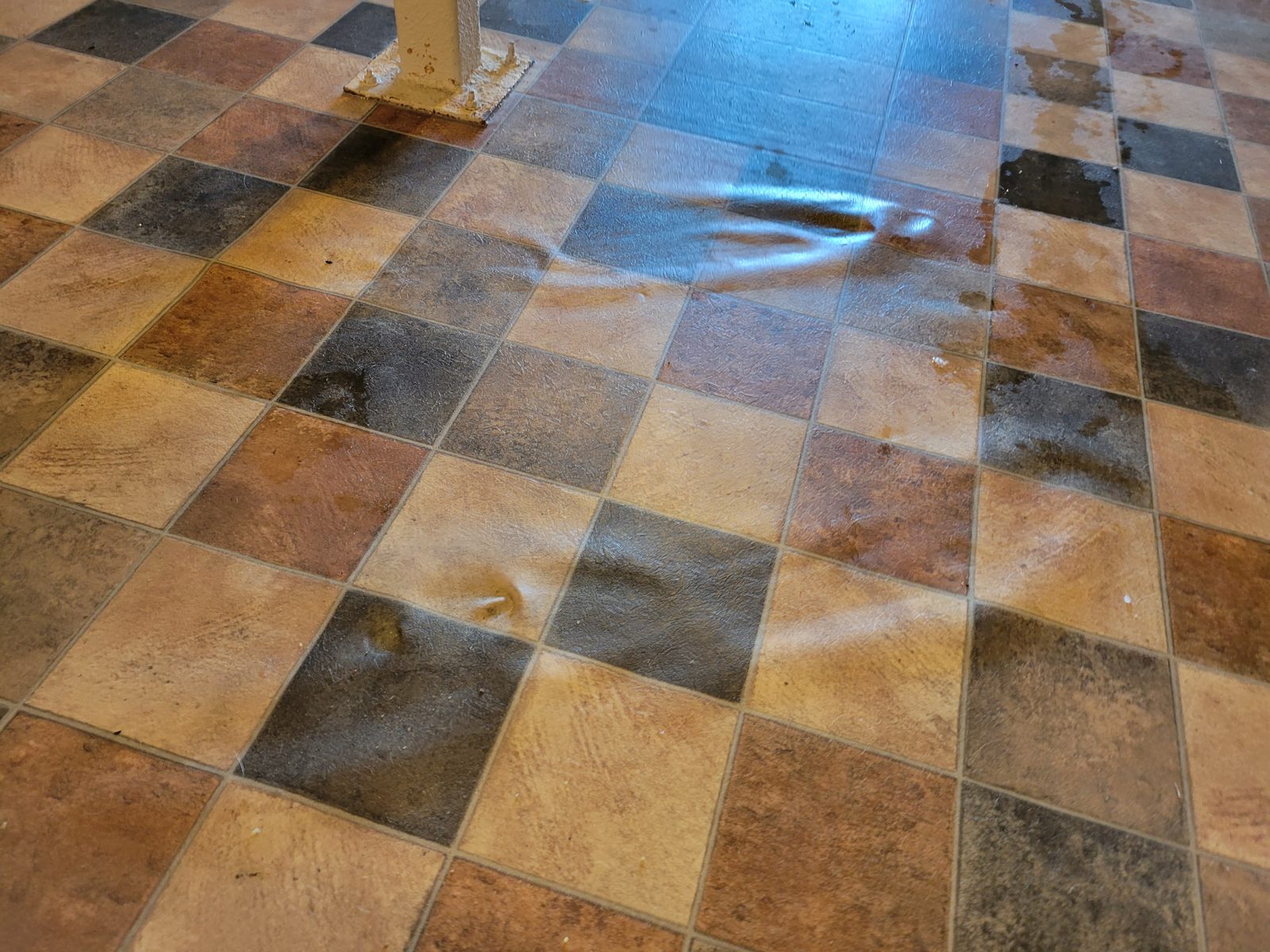
Most of the water damage calls we get aren’t from storms or floods. They come from something small that gave out inside the house: a washer hose, an old water heater, the little line behind the fridge. These leaks are rarely dramatic. They drip for days or weeks, and by the time you notice, the water has already gone somewhere you can’t see.
Here is what fails most often in Flathead homes, what to watch for, and what to do about it.
What fails most often
- Washing machine hoses. Rubber hoses behind the washer sit under constant pressure. They crack, bulge or let go at the fitting. Braided stainless hoses last longer, but not forever.
- Water heaters. A tank can leak slowly from a fitting, the relief valve or the tank itself. With well water or hard water, mineral buildup can speed up wear on the tank and valves.
- Fridge and icemaker lines. Thin tubes tucked behind the fridge, where nobody looks. A kinked, cracked or loose line can seep for a long time before the floor shows anything.
- Dishwasher and sink supply lines. They sit in dark cabinets. A slow drip can soak the cabinet floor and the subfloor under it for months.
- Toilet supply lines. The small line from the wall to the tank can fail at either end, onto a floor that’s hard to see around.
Flathead homes have their own weak spots
- Laundry in an unheated space. A washer in a garage, mudroom or unfinished area is exposed to cold snaps. Lines that freeze can split, and you may not find out until the thaw.
- Basements and crawl spaces. Water heaters and laundry often live downstairs. A leak there can run under flooring, into the bottom of walls and into insulation with no puddle you’d ever notice. In a crawl space, a slow leak can sit for weeks in the dark.
- Cold rooms and seasonal homes. A closed-off, unheated room or a vacation home can leak for days before anyone walks in.
- Well and hard water. Mineral scale can stiffen valves and fittings, so they drip or fail to shut all the way.
Early warning signs
- A musty smell in a laundry room, cabinet, basement or closet
- Flooring that feels soft, springy or cool underfoot
- Vinyl, laminate or tile that lifts, bubbles or gaps at the edges
- Bubbling or peeling paint, or a stain on a ceiling below a bathroom or laundry
- A water bill that jumps with no change in how you use water
- Dampness or rust at the base of the water heater, or a wet cabinet floor under a sink
If you notice one of these, don’t wait to see if it clears up. The water you can see is usually a small part of the water that is there.
What to do first
Shut off the water to the fixture, or at the main if you can’t find the valve. If water is near outlets or appliances, or a ceiling is sagging, stay out of that area and call us.
We wrote a full step-by-step for the first hour of a plumbing failure, and it applies here too: A Pipe Burst in a Flathead Cold Snap: What to Do in the First Hour. The short version is: stop the water, protect what you can, take photos and call.
Why hidden moisture matters
A supply-line leak starts out as clean water. In restoration terms, that’s Category 1. But it doesn’t stay that way. Once water soaks into flooring, drywall, cabinets and insulation and sits there, it can pick up contamination and become Category 2. That’s why a supply-line leak is not a mop-and-fan job. A restorer makes the category call on each job. Water from the drain side of a washer or dishwasher can start out as Category 2.
Wet materials also hold water you can’t see. The EPA notes that drying wet materials within 24 to 48 hours greatly lowers the chance of mold growth, so time matters.
That’s why we measure. Our IICRC-certified technicians use moisture meters to find where the water actually went, not just where it showed up. We set a drying goal based on what your own dry materials normally read, and we dry until the readings reach that goal. We don’t dry to a number of days. For more on how removing water and drying differ, see Water Extraction Versus Structural Drying.
Simple prevention
- Check hoses and lines once or twice a year: washer, fridge, and under sinks and toilets. Look for cracks, bulges, rust and drips at the fittings.
- Replace old washer hoses rather than waiting for a failure.
- Shut off the washer’s supply valves when you leave on a long trip or close up a seasonal home.
- Know your main shutoff, and make sure everyone in the house can find it.
- Look over the water heater now and then for rust, dampness, or a drip from the relief valve line.
- Keep cold spaces from freezing, especially unheated laundry areas and lines along exterior walls.
Claims and photos
If water has damaged your home, take photos and notes before anything is moved, and keep damaged items until your insurance company says otherwise. How to Preserve Insurance Claim Evidence walks through what to save. We work directly with your insurance company. What your policy covers is between you and your insurer, and we can’t promise coverage.
Quick answers
Is a leak from a washer hose or water heater “clean water”?
It starts as clean, Category 1 water because it comes from your supply. Once it soaks into floors, drywall and insulation and sits, it can become Category 2, so it’s worth having a professional look at it.
How do I know if a leak is hiding in a wall or under a floor?
Common signs are a musty smell, soft or bubbling flooring, peeling paint, ceiling stains and a higher water bill. A moisture meter can confirm what you can’t see.
How long does it take to dry out after an appliance leak?
It depends on how much water there was, what it soaked into and the conditions in the space. We dry to a measured goal set from your own dry materials, not to a set number of days.
Do I need a professional for a small leak?
If you caught a small spill right away and dried it fully, probably not. If water went under flooring, behind a wall or into a cabinet, or sat for a day or more, have it checked. Hidden moisture can lead to damage and mold later.
Will insurance cover an appliance leak?
That depends on your policy and the cause, so we can’t say. We work directly with insurance companies and can help you document the damage.
Call Stat Restoration
If you’ve found a leak, or suspect one you can’t see, we’re here day or night. We’re usually on-site in about an hour in the Flathead, and about 2½ hours for outlying towns such as Eureka and Libby. Our technicians are IICRC certified, and Stat Restoration is an IICRC Certified Firm.
Whether you’re in Kalispell, Columbia Falls or elsewhere in northwest Montana, learn more about our water damage restoration work.
Call (406) 752-8040.
