
A burst supply line can soak a living room in minutes. A slow leak under a fridge or washing machine can wet the pad for days before anyone notices a stain. In homes around Kalispell and Whitefish, the usual winter culprit is a frozen supply line that lets go when the weather breaks. In spring, snowmelt finds its way into basements and soaks the carpet from below. So, can wet carpet be restored? Often, yes — but only when the water source, how long it sat, the materials involved, and the drying all line up.
You cannot tell from the surface. Water moves below the fibers, into the pad, along tack strips, under baseboards, and sometimes into the subfloor and the bottom of the walls. Fast extraction and professional drying can save many carpets after a clean-water loss. Delays, dirty water, and hidden moisture can make replacement the safer choice.
Can Wet Carpet Be Restored After a Leak?
Restoration is most realistic when the water came from a clean source — a broken supply line, an overflowing sink, or a recent appliance leak — and the work starts in the first 24 to 48 hours, before odor sets in or mold starts to grow.
The carpet itself matters. Synthetic fibers such as nylon, polyester, and olefin are usually more recoverable than natural fibers. Wool can shrink, bleed color, or hold odor. The pad underneath is just as important. Standard bonded foam padding acts like a sponge and often has to be replaced even when the carpet can be cleaned and put back down.
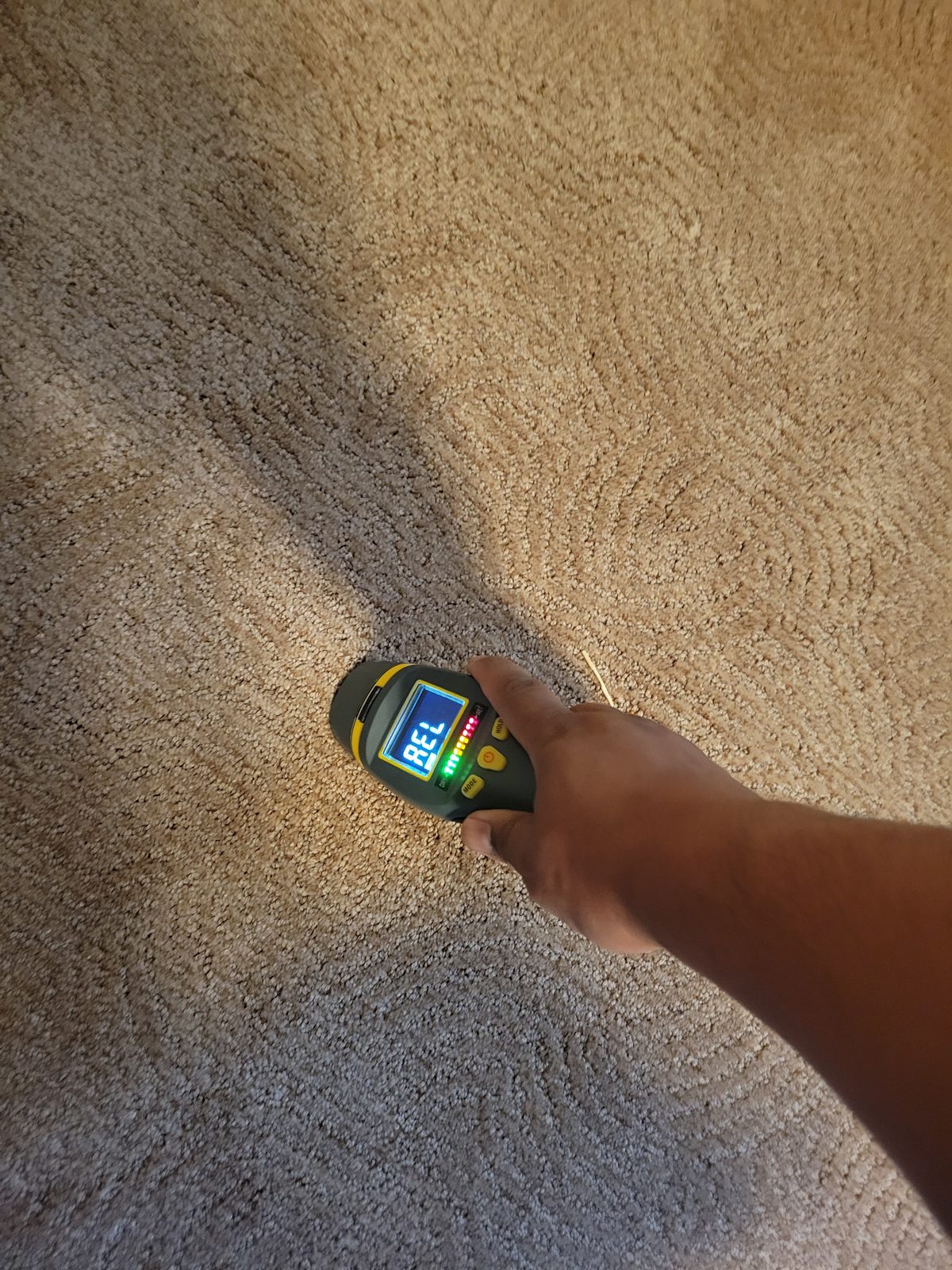
A technician looks at more than how the room looks. They identify the category of water, measure moisture in the carpet and the surrounding materials, check edges and seams, and see whether the pad, subfloor, or walls are wet. That keeps a surface dry-out from leaving a hidden moisture problem behind.
The Water Source Changes the Answer
Not all water losses are the same. Water is classified by contamination level, and that classification drives the plan. We walk through the three categories of water damage in more detail in a separate post.
Category 1 water starts as clean water from a sanitary source. If you get to it quickly, it may be possible to extract, clean, dry, and restore the carpet. Clean water does not stay clean forever. Sitting in carpet and building materials, it can pick up contaminants and move into a more serious category.
Category 2 water has a level of contamination that may cause discomfort or illness if people are exposed. Examples include a washing machine discharge or a dishwasher overflow. Some materials may still be restored, depending on the conditions, but the carpet and pad need a careful evaluation.
Category 3 water is heavily contaminated. That includes sewage backups, outdoor floodwater, and water that may carry harmful microorganisms or pollutants. Porous materials such as carpet and padding typically cannot be safely restored after this kind of loss. Removal, controlled disposal, cleaning of the remaining surfaces, and proper drying are usually required.
That is why a rental machine and a few household fans are not a reliable plan for every wet carpet, especially after a basement flood or water that entered while a house sat empty.
What Professional Drying Actually Involves
The first step is stopping the water. If a line is still running, drying equipment cannot catch up. Once the source is under control, technicians document the loss and map moisture so the plan is based on what is inside the materials, not on how the surface feels.
High-volume extraction comes first. Truck-mounted extractors or specialized portable equipment remove far more water than a household wet vacuum. In some clean-water losses, technicians may detach the carpet at an edge, lift it, and use targeted extraction and airflow to dry the carpet and the floor beneath it. That is only appropriate when the carpet, pad, and contamination level make it safe.
Pulling the standing water is only the first half of the job. The rest is structural drying: air movers across wet surfaces, dehumidifiers to keep evaporation going, and moisture meters and thermal imaging to find wet areas under flooring, behind baseboards, and inside walls. Equipment stays in place until the materials actually reach a dry standard. We explain the difference in our post on water extraction versus structural drying.
Cleaning comes after drying, when restoration is appropriate. That may include a professional carpet cleaning, odor treatment, and sanitizing chosen for the conditions. Once the carpet is dry and it is a candidate to stay, Murphy’s Carpet Cleaning, a related sister company, handles that cleaning step. The goal is not merely dry carpet. It is a clean, stable room without trapped moisture or a lingering smell.
Signs the Carpet May Be Worth Saving
A carpet has a better chance when it was wet for a short time, the water was clean, and extraction starts soon. It should not have a persistent odor, visible mold, delamination, staining that cannot be treated, or damage to the seams and backing.
The condition of the room matters as much as the carpet. If moisture has reached drywall, insulation, cabinets, hardwood transitions, or the subfloor, the work may go beyond the flooring. A dry-looking carpet can still sit over wet padding and damp plywood. A moisture inspection is more reliable than waiting to see whether a musty smell develops.
For landlords and property managers, speed also helps keep a unit from becoming a larger problem. Photos, moisture readings, and drying records create a clear account of what was affected and what was done. That can be useful when you talk with an insurance carrier, though coverage depends on the policy and the cause of the loss.
When Replacement Is the Safer Call
Replacement is often necessary when the padding has absorbed contaminated water, the carpet has been wet too long, or the backing has separated from the fibers. It may also be the practical choice if the carpet is heavily soiled, keeps an odor after proper treatment, or cannot be dried without risking damage to other materials.
Trying to save a carpet only makes sense if it can be returned to a safe, clean condition. Keeping carpet that still holds contamination or moisture can lead to odor, mold concerns, damaged subfloors, and a bigger repair later. The health of the people in the house and the condition of the building come first.
What to Do Before Help Arrives
If it is safe to do so, stop the water and move furniture, boxes, and other items off the wet carpet. Avoid tracking water into dry rooms. Blot small wet areas with clean towels, but do not assume a dry surface means the pad is dry.
Do not use a standard household fan on contaminated water, and do not put bleach or household chemicals on the carpet. Those products can damage fibers, set stains, or create indoor air problems. If outlets, appliances, or cords are near standing water, stay clear and wait for qualified help.
Around the Flathead, we can usually be on site in about an hour. Eureka and other outlying towns take about two and a half hours. If water has reached your carpet, call Stat Restoration at (406) 752-8040, day or night. We will extract what we can, find hidden moisture, and give you a clear plan for drying or replacement.
