
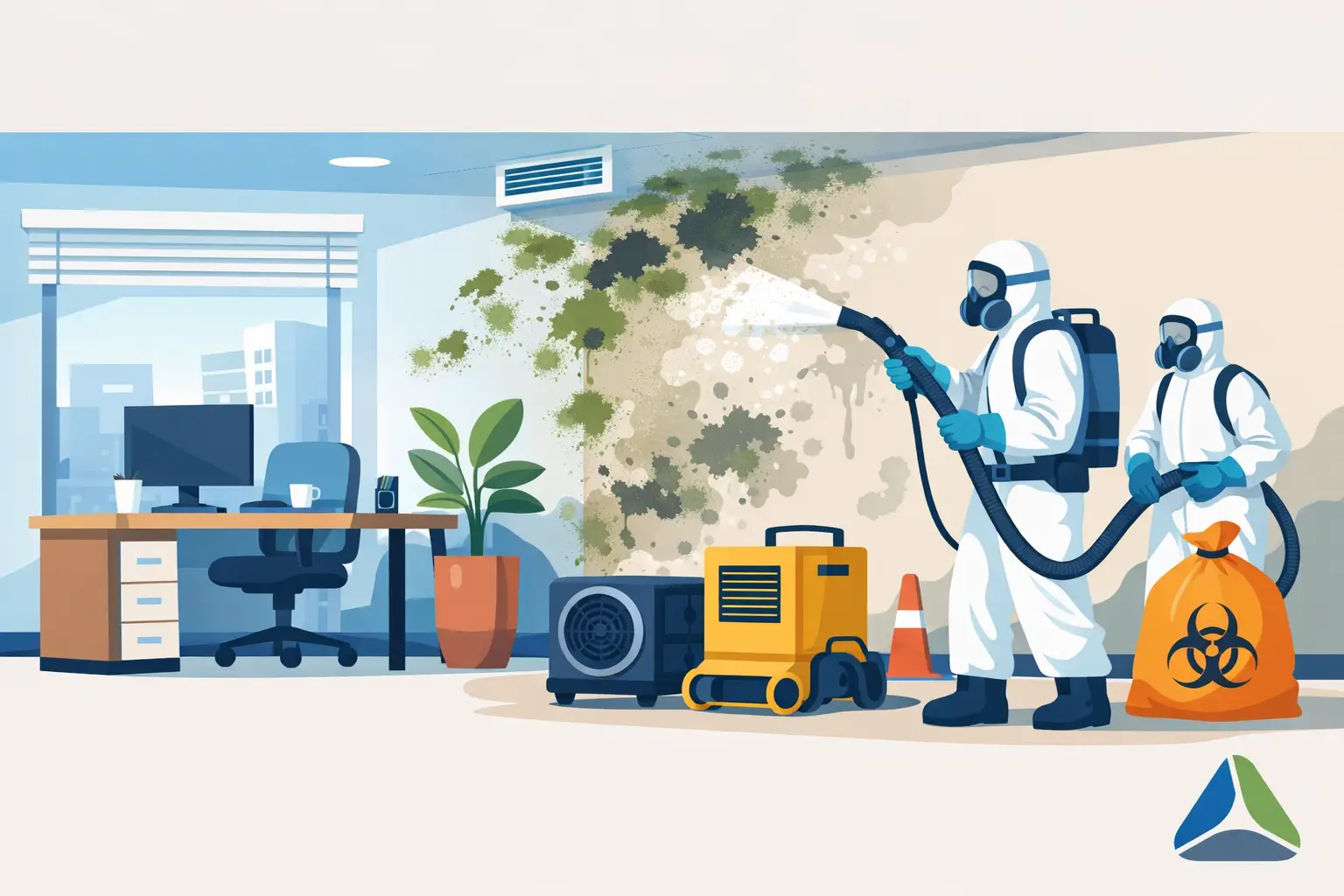
A musty odor near the break room, a water stain above a workstation, or visible growth behind stored files can turn into a business interruption fast. Office mold remediation is not a cosmetic cleaning task. It is a controlled process for finding the moisture source, protecting occupants, preventing cross-contamination, and restoring the affected space so your team can work safely.
For office owners, property managers, and tenants, the first priority is stopping the conditions that allow mold to grow. Northwest Montana buildings face their own set of risks: frozen or burst pipes, snowmelt intrusion, roof leaks, high indoor humidity, and slow plumbing leaks hidden behind finished walls. A quick response can often limit the affected area. Waiting can allow moisture and mold to reach insulation, drywall, flooring, furnishings, and adjacent offices.
When an Office Mold Problem Needs Immediate Action
Mold can begin growing after a water event when materials remain damp, but the first visible spot is rarely the full story. Growth may be concealed behind baseboards, under carpet, above suspended ceilings, inside wall cavities, or around HVAC components. An odor that returns after routine cleaning is also a reason to investigate, especially following a leak or flooding event.
Take visible growth, recurring moisture, warped building materials, and persistent musty odors seriously. Employees may also report irritation, headaches, or respiratory discomfort. Those reports do not identify the cause on their own, but they should prompt a prompt, documented inspection rather than assumptions.
The right response depends on the source, the size of the affected area, and the materials involved. A small area caused by a corrected surface-condensation issue may require a limited repair. A leak that has traveled through walls, affected multiple suites, or contaminated porous materials requires a more deliberate remediation plan. If sewage, floodwater, or other contaminated water is involved, the project also carries sanitation concerns beyond mold.
What to Do Before Office Mold Remediation Begins
Protect people and preserve evidence without spreading the problem. Do not paint over stains, spray fragrance to cover an odor, or use a fan to dry a visibly moldy area. Those steps can conceal conditions or move particles into clean parts of the building.
If practical, move employees away from the affected area and restrict access. Protect paper files, electronics, and inventory from further water exposure, but avoid removing visibly contaminated porous items through occupied areas without containment. Photograph visible conditions, note when the leak or odor was first noticed, and keep records of prior plumbing, roof, or HVAC work. This documentation helps establish the scope of loss and supports insurance communication.
Then address active water immediately. Shut off a leaking supply line when it is safe to do so, place a container under a small active drip, or contact building maintenance for a roof or mechanical issue. Do not open walls or remove wet materials until the area has been evaluated. Disturbing hidden mold without proper controls can turn one affected office into a larger indoor air quality problem.
For commercial properties in Kalispell, Whitefish, Columbia Falls, and throughout Flathead and Lincoln counties, fast local response matters. A restoration team that can arrive, stabilize active damage, and document conditions gives owners and managers control before a manageable leak becomes an extended closure.
How Professional Office Mold Remediation Works
A qualified remediation project starts with inspection, not demolition. Technicians assess the affected materials, identify likely moisture pathways, and determine whether the source is plumbing, roofing, drainage, condensation, appliance failure, or another building issue. Moisture meters and thermal imaging can help locate damp areas that are not visible from the room.
The scope should account for more than what can be seen. Drywall can wick moisture upward. Carpet backing and pad can retain water beneath an apparently dry surface. Insulation, wood framing, furniture, and HVAC pathways each require different decisions about cleaning, drying, removal, or replacement.
Containment Protects the Rest of the Office
Before demolition or detailed cleaning begins, technicians isolate the work zone. Depending on the project, this can include physical containment barriers, controlled entry points, and negative air equipment with high-efficiency filtration. The goal is simple: keep dust and mold-affected debris from moving into occupied work areas, hallways, or neighboring suites.
This step is especially important in offices with shared corridors, medical or professional services tenants, customer-facing spaces, and open workstations. The fastest-looking approach is not always the fastest path to reopening. Skipping containment can create a wider cleanup, more disruption, and a more difficult conversation with tenants or employees.
Removal and Cleaning Follow Material Conditions
Non-salvageable porous materials may need to be removed under controlled conditions. That can include damaged drywall, insulation, carpet pad, ceiling tile, or particleboard furnishings. Structural framing and other sound materials may be cleaned using appropriate methods, then dried to verified targets.
Not every item needs to be discarded. The decision depends on the material, the extent and duration of moisture exposure, the contamination category, and whether the item can be cleaned and dried thoroughly. A hard-surface desk may be recoverable, while water-damaged upholstered furniture or saturated files may not be. Clear documentation helps owners make sound cost and recovery decisions.
Drying Must Be Measured, Not Guessed
Cleaning without controlling moisture invites mold to return. Restoration teams use commercial air movers, dehumidifiers, and moisture-monitoring equipment to dry affected building assemblies. Drying equipment is adjusted as conditions change, and readings are compared with appropriate dry standards for the building.
This is where professional oversight pays off. A wall can feel dry to the touch while insulation or framing behind it remains wet. Removing equipment too early can leave a hidden problem in place. Running equipment without a plan can waste time, add noise, and disrupt office operations without achieving the needed result.
Keeping Business Operations Moving During Remediation
Office closures are not always necessary, but continued occupancy must be evaluated honestly. A contained, isolated project may allow unaffected departments to remain open. A larger loss involving HVAC systems, multiple work zones, or significant water intrusion may require temporary relocation, staggered schedules, or after-hours work.
Property managers should communicate early and plainly with tenants and employees. Explain which areas are restricted, what work is occurring, how access will be managed, and when the next update will be provided. Avoid promising a reopening date before the source is repaired and drying data confirms progress. Reliable updates are more valuable than optimistic guesses.
A full-service restoration provider can reduce the administrative burden by documenting affected materials, equipment placement, daily drying progress, photos, and completed work. That record supports the property owner and helps insurance carriers understand what happened, why specific actions were necessary, and what remains to be restored.
Preventing Mold After the Space Is Restored
The best mold remediation project is one that does not repeat. Once repairs are complete, building operators should correct the underlying cause rather than treating only the visible damage. That might mean repairing flashing, improving drainage, insulating a sweating pipe, servicing HVAC equipment, replacing a failed appliance connection, or changing how moisture-prone rooms are ventilated.
Routine walkthroughs matter. Check under sinks, around water heaters and break-room appliances, below windows, near exterior walls, and in mechanical rooms. Investigate ceiling stains immediately, even if they appear dry. In vacant suites, periodic inspections are critical because a slow leak can go unnoticed for weeks.
For facilities with a history of water intrusion, keep a response plan that identifies shutoff locations, emergency contacts, key access, tenant notification procedures, and insurance information. When water is stopped quickly and professional drying starts promptly, the odds of an extensive mold project drop significantly.
If your office has a musty odor, visible growth, or water damage that has not fully dried, treat it as a property emergency. Stat Restoration provides 24/7 response, IICRC-certified restoration work, detailed documentation, and direct insurance coordination so you can protect your people, your property, and your ability to stay open.
