
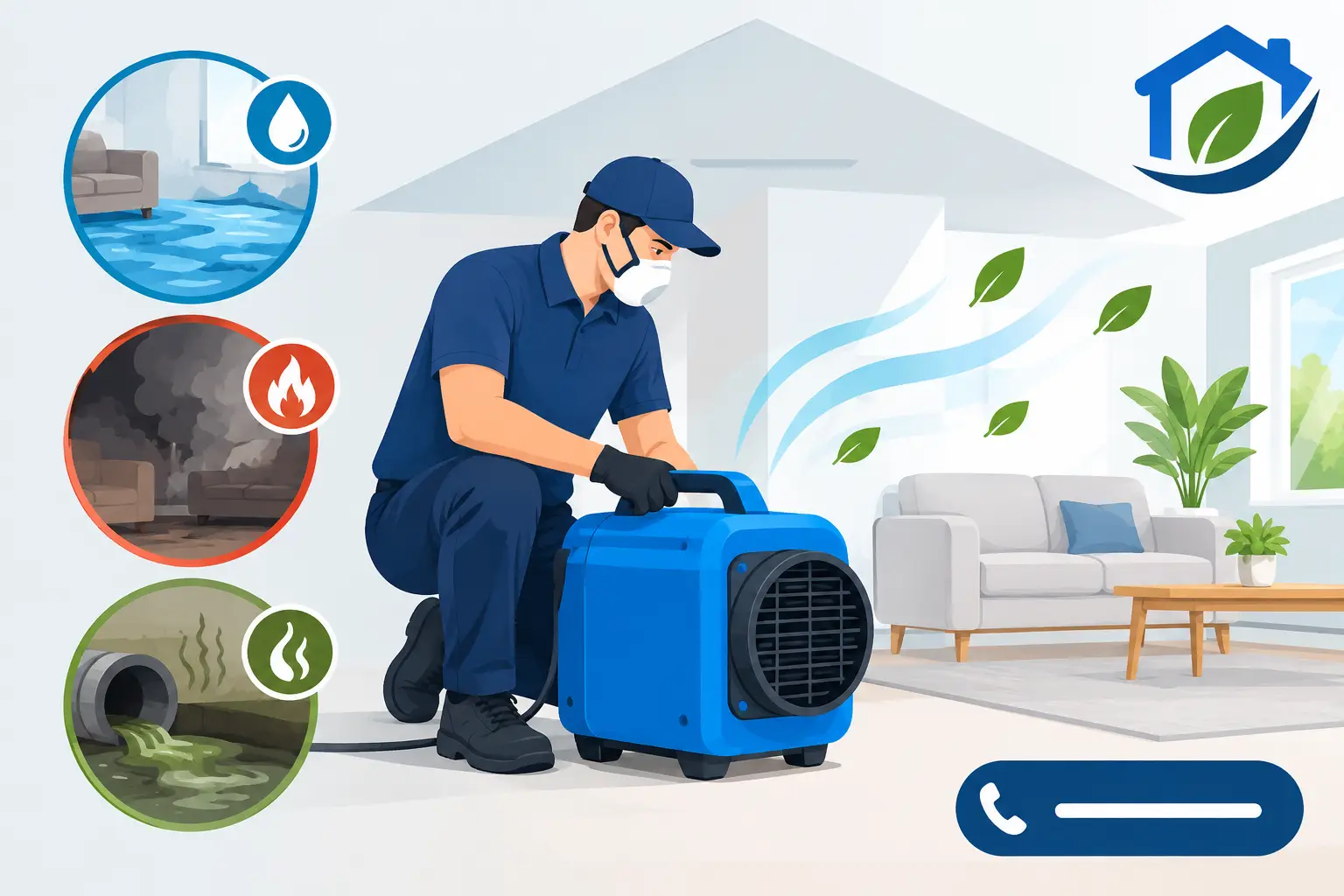
A property can look clean and still carry the unmistakable smell of smoke, sewage, mildew, or stagnant water. Effective odor removal is not about covering that smell with fragrance. It means finding the contaminated material, correcting the conditions that created the odor, and treating the air and affected surfaces so the problem does not return.
For homeowners and property managers, lingering odors are often a warning that damage remains behind walls, below flooring, inside HVAC components, or in porous belongings. After a flood, fire, plumbing failure, sewage backup, or mold discovery, fast professional action protects the building, the people inside it, and the value of the property.
Why Lingering Odors Need More Than Cleaning
Most strong property odors come from particles or gases released by a source material. Smoke leaves microscopic residues on framing, drywall, insulation, fabrics, and ductwork. Water damage creates the damp conditions that allow bacteria and mold to produce musty odors. Sewage introduces organic contamination that can remain in carpet padding, subflooring, wall cavities, and contents.
A surface wipe, scented spray, or air freshener may make a room more tolerable for a few hours. It does not remove the source. In some cases, masking an odor delays discovery of a wet wall, hidden microbial growth, or contaminated building material that should be removed.
The longer moisture and contamination remain, the more difficult and expensive restoration can become. This is particularly true in Northwest Montana, where wet basements, snowmelt, frozen-pipe breaks, and seasonal humidity can trap moisture in building assemblies. An odor that returns after cleaning is a reason to investigate, not a reason to use more fragrance.
Odor Removal Starts With Source Control
Professional restoration begins with an assessment of what caused the odor and where contamination traveled. Technicians inspect visible surfaces, but they also use moisture meters, thermal imaging, and air-sampling tools when conditions call for them. The goal is to identify hidden moisture, smoke residue patterns, affected insulation, and materials that cannot be safely cleaned.
Source control may involve stopping an active leak, extracting standing water, removing sewage-affected carpet and padding, isolating a smoke-damaged area, or disposing of unsalvageable porous contents. During this stage, containment matters. Proper barriers and negative-air equipment can help keep odors, dust, soot, and contaminants from spreading into unaffected rooms.
Not every material needs to be discarded. Solid wood, metal, glass, and some hard-surface finishes can often be cleaned and restored when treated promptly. Carpet, insulation, particleboard, untreated drywall, and upholstered items require a closer evaluation. Whether an item can be saved depends on the type of contamination, how long it was exposed, and whether cleaning can reach the affected material.
The Right Process Depends on the Odor
Water and Mold Odors
A musty smell usually points to moisture, even when no water is visible. The first priority is drying the structure to appropriate moisture levels with commercial air movers and dehumidifiers. Simply running household fans can move damp air around without adequately drying wall cavities, subfloors, or framing.
If mold growth is present, affected areas must be contained and remediated using appropriate procedures. Cleaning the visible growth without addressing the moisture source invites a repeat problem. After removal and detailed cleaning, deodorization addresses remaining odors only once the building is dry and stable.
Smoke and Fire Odors
Smoke odors are persistent because soot and oily residues can travel through a structure far beyond the area where the fire occurred. They settle on ceilings, inside cabinets, in insulation, and throughout HVAC systems. Heat can also drive smoke particles deeply into porous materials.
Smoke restoration generally requires specialized cleaning of structural surfaces and contents before deodorization begins. Depending on the fire and materials involved, technicians may use HEPA vacuuming, residue-specific cleaning agents, controlled air filtration, thermal fogging, or hydroxyl and ozone treatment. These are not interchangeable methods. The right approach depends on the type of smoke, the affected materials, occupancy needs, and safety requirements.
Ozone treatment, for example, can be useful in certain unoccupied spaces but must be handled by trained professionals. It is not a substitute for soot removal, and people, pets, and plants cannot remain in a treatment area. A reputable restoration team explains when a treatment is appropriate rather than treating every odor with the same machine.
Sewage and Biohazard Odors
Sewage odors require urgent attention because they may signal harmful contamination. Any porous material contacted by Category 3 water, including carpet padding, insulation, and some drywall, may need to be removed. The work area should be contained, cleaned, disinfected, and dried according to recognized restoration and safety protocols.
This is not a situation for household disinfectants and a rental fan. Contaminated water can move under flooring and into cavities where odor and health risks remain out of sight. Professional crews use protective equipment, controlled removal procedures, extraction equipment, and documented cleaning practices to return the area to a safe condition.
Pet, Cooking, and Long-Term Occupancy Odors
Not every odor begins with an emergency, but the same principle applies: locate the source before deodorizing. Pet urine can soak through carpet into padding and subflooring. Heavy cooking odors can collect in cabinet interiors, filters, painted surfaces, and ducts. Tobacco smoke often penetrates nearly every porous surface in a home.
These jobs can involve targeted cleaning, removal of damaged padding or subfloor materials, sealing of affected surfaces, HVAC cleaning, and professional deodorization. Results depend on how deeply the odor has penetrated and whether all contributing materials are treated. A quick surface clean may help with light odors, but long-term occupancy odors frequently require a more complete plan.
What Professional Deodorization Actually Does
Once the source is corrected and affected materials are cleaned or removed, restoration professionals can neutralize remaining odor molecules. This is different from adding a stronger scent to the room. Equipment and products are selected based on the contaminant, the space, and the materials involved.
Air scrubbers with HEPA filtration help capture airborne particles during cleaning and demolition. Hydroxyl generators can be used in occupied or sensitive environments when operated correctly, while other treatments may require the building to be vacant. Thermal fogging can distribute deodorizing agents into spaces smoke has reached, but it works best after residue removal. In some cases, sealing cleaned structural surfaces is necessary to prevent residual odors from migrating back into the living space.
The process should be measured, not guessed. A responsible contractor documents moisture conditions, affected areas, materials removed, cleaning steps, and drying progress. That record helps property owners understand what was done and provides useful support for an insurance claim.
What to Do Before Help Arrives
If an odor follows a water, fire, or sewage event, protect yourself first. Avoid entering areas with visible mold growth, sewage, soot, or structural damage. Do not run an HVAC system after a fire or sewage event until it has been evaluated, since it can distribute contamination throughout the property.
For a water loss, stop the water source if it is safe to do so and move dry valuables away from affected areas. Avoid walking through contaminated water or attempting to save sewage-soaked materials. After a fire, do not wipe soot from walls or upholstery with ordinary cloths, which can spread residue and drive it deeper into fabrics.
Take clear photos of the damage before disposal when possible. Then contact your insurance carrier and an experienced restoration company. Stat Restoration provides 24/7 emergency response throughout the Flathead Valley and Lincoln County, with IICRC-certified technicians who can contain the loss, document conditions, and coordinate the restoration process with insurers.
When an Odor Means You Should Act Now
Call for a professional inspection promptly if you notice a persistent musty odor after a leak or flood, sewage smell from a basement or bathroom, smoke odor after a small fire, or an odor that returns when heat or air conditioning runs. Also act quickly if occupants experience irritation, headaches, or respiratory discomfort associated with a damaged area.
The smell itself may not identify the exact problem, but it is valuable evidence. Treat it as a signal that the building needs attention. Removing the source early can prevent a manageable cleanup from becoming widespread material replacement, mold remediation, or a prolonged vacancy.
A clean-smelling property should also be a dry, safe, and properly restored one. When the source is handled first, odor removal becomes a lasting part of recovery rather than a temporary cover-up.
