
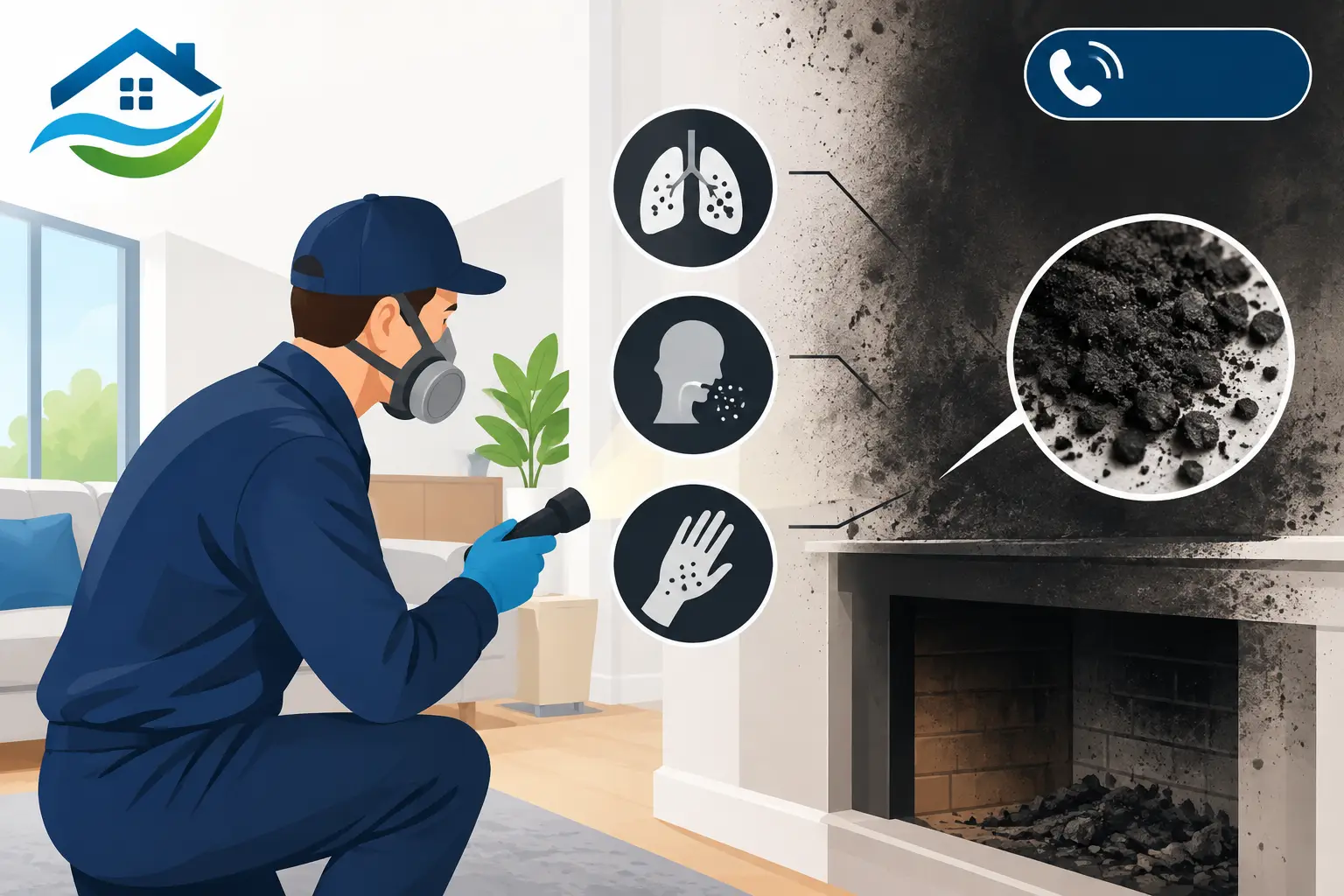
A fire can be out, the visible smoke can be gone, and the building can still be unsafe to occupy normally. If you are asking, is soot hazardous, the answer is yes. Soot is more than a black stain left on walls or furniture. It is a fine mixture of carbon particles, ash, oils, acids, and chemicals created when materials burn. It can travel far beyond the room where the fire started, settle inside cabinets and HVAC systems, and continue affecting indoor air and building materials until it is properly removed.
For homeowners, landlords, and business operators, the immediate priority is simple: protect people first, then prevent the contamination from spreading. Do not assume a small kitchen fire, fireplace puff-back, or electrical fire only caused cosmetic damage.
Is Soot Hazardous to Your Health?
Soot can be hazardous because its particles are extremely small. When disturbed, they can become airborne and be inhaled. Depending on what burned, soot may also contain irritants and potentially harmful combustion byproducts from plastics, synthetic fabrics, treated wood, insulation, electronics, fuel, or household chemicals.
Short-term exposure can irritate the eyes, nose, throat, and lungs. People may experience coughing, wheezing, headaches, nausea, or a burning sensation in the throat. Children, older adults, pregnant people, and anyone with asthma, COPD, heart conditions, or other respiratory concerns may be more sensitive to smoky indoor conditions.
The level of risk depends on the fire, the materials involved, how long the building was exposed, the amount of residue, and whether soot has entered the ventilation system. A light surface film from a contained incident does not always create the same hazard as heavy residue throughout a structure. But it should still be treated seriously. You cannot reliably judge contamination by odor or what is visible on one wall.
If anyone has severe trouble breathing, chest pain, confusion, or worsening respiratory symptoms after a fire, seek medical attention promptly. Property cleanup should never take priority over a health emergency.
Why Soot Damage Keeps Spreading After a Fire
Soot behaves differently than ordinary dust. The particles are often dry, powdery, and easily transferred. A hand on a smoky wall, a vacuum with poor filtration, or a household fan can move residue into clean rooms and deeper into porous materials.
It also has a chemical side. Many fire residues are acidic or oily. Left in place, they can discolor paint, tarnish metal, etch glass, weaken finishes, and permanently stain fabrics and upholstery. Electronics are especially vulnerable because fine residue can settle inside equipment and contribute to corrosion or operational problems.
In Northwest Montana, a fire loss can become more complicated when cold weather limits ventilation or forces a property to remain closed up. Smoke odor and airborne particles may remain concentrated indoors. If the heating system runs after a fire, ducts can distribute contamination throughout the home or commercial space.
What Not to Do After Finding Soot
The wrong cleaning attempt can turn a contained loss into a larger restoration project. Avoid dry dusting, sweeping, or using a standard household vacuum. These methods can redistribute fine particles rather than capture them. Do not scrub soot with water, all-purpose cleaner, or a wet rag before the residue has been evaluated. Rubbing can push oily soot into paint, drywall texture, wood grain, carpet fibers, and fabric.
Do not use fans to clear the odor, and do not operate the furnace or air conditioning system if you suspect smoke entered the ductwork. Avoid washing smoke-damaged clothing with unaffected laundry. Keep children, pets, tenants, and unprotected workers out of the affected area as much as possible.
There are also situations where entering the building is not appropriate at all. Wait for clearance from fire officials or other authorities if there is structural damage, a strong chemical odor, a risk of electrical damage, standing water, or possible asbestos-containing materials in an older property.
The First Steps That Protect the Property
Once emergency responders have released the site, document conditions before moving items or beginning cleanup. Take clear photographs and video of affected rooms, contents, ceilings, walls, and visible residue. Keep receipts for emergency lodging, temporary board-up, and other necessary expenses. This documentation can support an insurance claim and establish the condition of the property immediately after the loss.
If it is safe to do so, isolate the affected area by closing doors and limiting foot traffic. Turn off HVAC equipment until it can be evaluated. Do not discard damaged contents without first documenting them and speaking with the insurance carrier, unless they present an immediate safety concern.
Then bring in a qualified restoration team. A professional assessment identifies not only where soot is visible, but where smoke traveled and which materials can be cleaned, sealed, restored, or need replacement. That decision matters. Replacing every affected item is expensive and unnecessary, while trying to clean unsalvageable materials can leave behind odor and contamination.
How Professional Soot Cleanup Works
Fire and smoke restoration is a controlled cleaning process, not a single wipe-down. Certified technicians begin by assessing the fire source, fuel type, residue pattern, moisture conditions, structural safety, and the extent of smoke migration. They use appropriate personal protective equipment and containment methods to keep particles from moving into unaffected spaces.
Dry soot may require specialized HEPA vacuuming and dry cleaning sponges before any wet cleaning occurs. Oily or protein-based residue, often associated with kitchen fires, can require different cleaning agents and methods because it is sticky and can be nearly invisible while producing a persistent odor. Technicians select cleaning procedures based on the surface and the type of residue, not a one-size-fits-all product.
Porous materials need particular attention. Insulation, unfinished wood, drywall, carpets, upholstered furniture, and contents may absorb smoke particles and odor. In some cases, detailed cleaning and deodorization can restore them. In others, removal is the safer and more reliable option.
Odor control also requires more than fragrance. Effective deodorization targets the source through cleaning, filtration, and, when appropriate, professional odor-treatment equipment. If residue remains inside a wall cavity, duct, cabinet, or upholstered item, the smell may return when temperatures rise or humidity changes.
At Stat Restoration, IICRC-certified technicians document the loss, contain affected areas, coordinate with insurance carriers, and complete the restoration process with the goal of returning the property to a clean, safe condition. For a fire loss, fast action helps preserve finishes, contents, and the evidence insurers need to evaluate the claim.
When a Small Fire Still Needs Professional Help
Professional cleanup is warranted after any event that leaves visible soot, persistent smoke odor, residue on ceilings or contents, or smoke that traveled beyond the immediate fire area. It is especially appropriate after fires involving appliances, electrical components, plastics, fuel, insulation, or unknown materials.
A minor stovetop flare-up may only need careful cleaning if it was immediately contained and produced no visible residue or odor. However, a grease fire that left a yellow or brown film on cabinets, a fireplace backdraft that covered rooms in black dust, or a garage fire involving stored products should be assessed by restoration professionals. The same is true for commercial properties, where smoke can affect inventory, customer areas, tenant spaces, and HVAC systems well beyond the point of origin.
For landlords and property managers, speed also reduces the risk of disputes and business interruption. A documented professional inspection provides a clearer record of conditions, recommended work, and the steps taken to protect occupants.
Protect Occupants Before You Protect Possessions
Most belongings can be evaluated, cleaned, packed out, or replaced. Lungs and safety margins are less forgiving. Keep soot contamination contained, avoid do-it-yourself methods that spread particles, and arrange a professional inspection before treating the area as normal again.
After a fire, the safest next move is not to clean faster. It is to make sure the cleanup is complete.
