
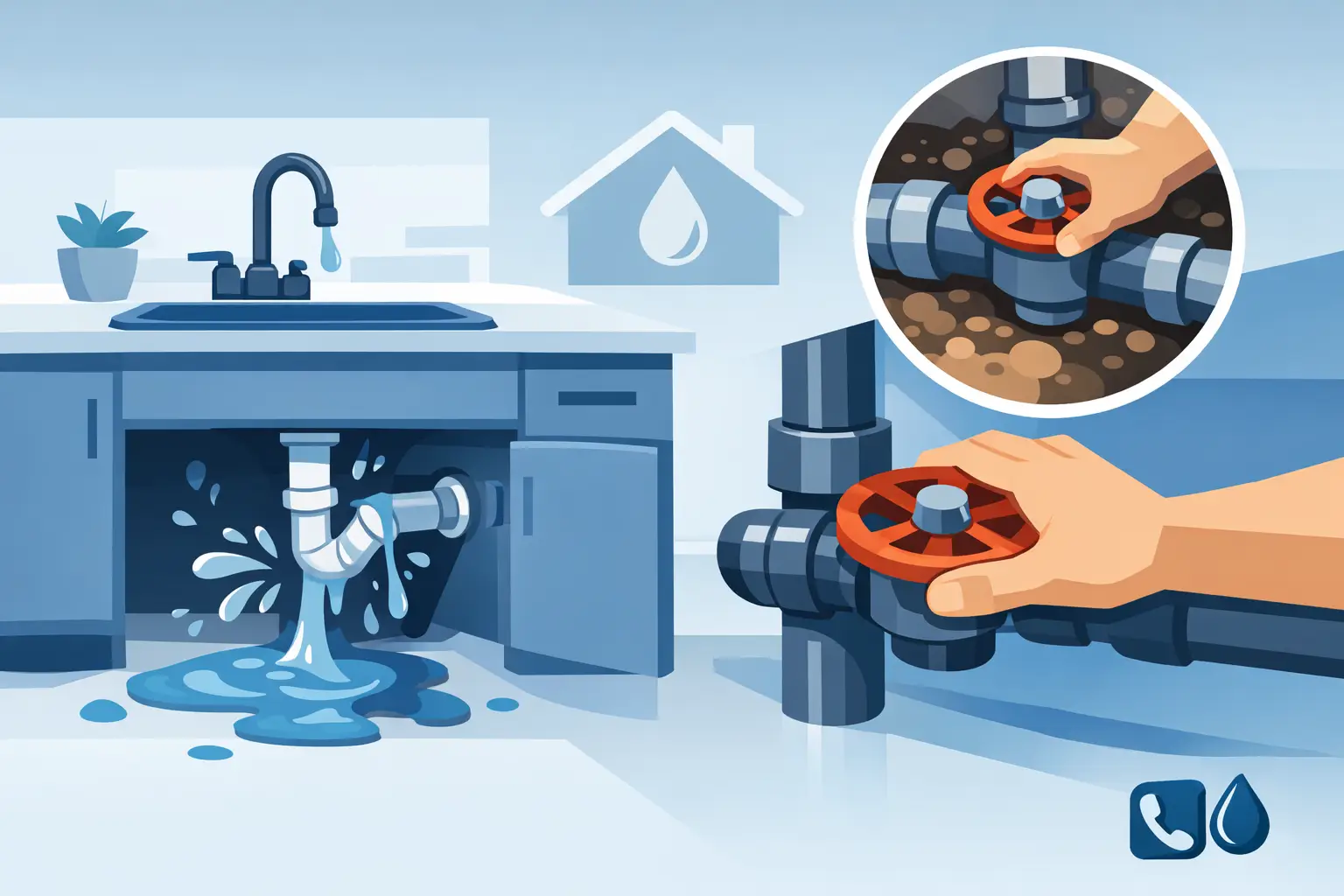
A supply line can fail fast. One minute, water is pooling beneath a sink or spraying behind a washing machine. The next, it is moving under flooring, into wall cavities, and toward rooms below. Knowing how to shut off water quickly can limit the immediate loss – but stopping the flow is only the first step in protecting your property.
For homeowners, landlords, and property managers, the right response is simple: stop the water, protect people from electrical and contamination hazards, document what happened, and get professional drying underway before moisture becomes a larger restoration problem.
Shut Off Water Quickly at the Source First
If the leak is coming from a single fixture or appliance, look for its local shutoff valve before turning off water to the entire building. This keeps water available elsewhere in the property while isolating the problem.
Under sinks, local valves are usually located on the wall or floor below the fixture. Toilets typically have one valve on the supply line behind the bowl. Washing machines often have hot and cold valves in the laundry connection box or on the wall behind the machine. Refrigerators with ice makers and dishwashers may have dedicated valves under the sink, in a nearby cabinet, basement, utility room, or crawlspace.
Most standard shutoff valves close when turned clockwise. A quarter-turn ball valve closes with a 90-degree turn so that the handle sits perpendicular to the pipe. Do not force a corroded valve. An old valve can break, creating a larger release of water. If it will not turn with reasonable hand pressure, move to the main water shutoff.
When a Fixture Valve Is Not Enough
Turn off the main water supply immediately when water is spraying from a pipe, a ceiling is leaking, a water heater is failing, an appliance hose has burst, or you cannot identify the source. The main shutoff is also the right choice when water is coming through floors, walls, or ceilings, because the visible water may not be the only active leak.
In many homes, the main valve is near where the water service enters the building. Check the basement, crawlspace, mechanical room, utility closet, garage, or an exterior wall near the water meter. Some properties have an interior shutoff plus a municipal curb valve near the meter. Use the interior valve whenever possible. The curb valve may belong to the utility and may require a special key or authorization.
Once the main valve is closed, open a cold-water faucet at the lowest practical point in the home, such as a basement sink or exterior spigot. This relieves pressure and helps drain remaining water from the lines. Then open a faucet on an upper floor to let air into the plumbing system.
Protect Yourself Before You Start Cleanup
Water emergencies are not always safe to handle alone. If water is near outlets, power strips, electrical panels, appliances, or wiring, do not step into the affected area until electricity has been safely shut off. If you can reach the electrical panel without entering water or a wet area, turn off power to the affected circuit. When there is any doubt, wait for a qualified professional.
Treat sewage backups, toilet overflows involving waste, and water from outside flooding as contaminated. Do not use household fans to spread the air, and do not attempt to save porous items such as soaked carpet padding, insulation, or upholstered furniture without proper assessment. Contaminated water can carry bacteria and other hazards into materials that look clean on the surface.
A quick safety check should cover four priorities:
- Keep children, pets, tenants, and employees away from wet areas.
- Avoid standing water near electrical sources or damaged ceilings.
- Do not enter a room with a sagging ceiling or visible structural movement.
- Do not use a household vacuum to remove water or plug equipment into wet outlets.
If a ceiling is bulging with trapped water, stay clear. The weight can cause a sudden collapse. A restoration professional can assess the area, control the release safely, and inspect the hidden materials above it.
What to Do in the First Hour After the Water Stops
Take clear photos and short videos before moving belongings, if it is safe to do so. Capture the source of the leak, standing water, affected rooms, damaged contents, and any visible staining. This documentation can help with an insurance claim and gives the restoration team a clearer record of conditions at the time of loss.
Next, move dry and valuable items out of the affected area. Lift furniture onto blocks or foil barriers if the flooring is wet, and remove rugs that can be safely handled. Do not drag heavy furniture across saturated carpet or wood flooring. That can grind in moisture, damage finishes, and make recovery harder.
You can blot small areas with towels and place containers under an active drip after the supply is shut off. However, a mop, shop vacuum, and open windows are not a complete drying plan for a significant leak. Water moves below baseboards, under flooring, through insulation, and into framing. In Northwest Montana, cold temperatures and closed homes can further slow natural drying and create conditions for mold growth.
Call your insurance carrier promptly to report the loss, but do not wait for an adjuster before taking reasonable emergency steps to prevent additional damage. Preserving the property is part of responsible loss mitigation. Keep receipts for emergency expenses and avoid discarding damaged materials until they have been documented and your insurer has provided direction, unless removal is necessary for health and safety.
Why Water Can Keep Causing Damage After the Leak Ends
The visible puddle is rarely the full scope of a water loss. Water follows gravity, gaps, wiring paths, seams in flooring, and porous materials. A supply-line leak in an upstairs bathroom can wet the subfloor, ceiling cavity below, wall insulation, baseboards, and adjacent rooms before it appears downstairs.
That is why professional water mitigation relies on more than surface cleanup. Certified technicians use moisture meters and thermal imaging to locate moisture behind finished materials. They extract standing water with professional equipment, place air movers and dehumidifiers based on measured conditions, and monitor drying progress until affected materials reach appropriate moisture levels.
Drying too slowly creates trade-offs that property owners do not always see at first. Wood flooring can cup or buckle. Drywall can lose strength. Cabinets can swell. Carpet backing and padding can retain moisture. Within a short period, damp materials can support microbial growth, which may expand the scope and cost of restoration.
Prepare Before You Need to Shut Off Water Quickly
The best time to locate a shutoff valve is not during a midnight leak. Take ten minutes to find your main water shutoff, test whether it turns freely, and make sure every responsible adult, property manager, or onsite employee knows where it is. Mark the valve clearly if its location is not obvious.
For rental and commercial properties, include the main shutoff location in emergency procedures. Give tenants or staff a clear instruction: call the designated contact, turn off water only if it is safe, and report the source and affected areas. Fast reporting can prevent a small under-sink leak from becoming damage to multiple units.
Inspect appliance hoses, water heater connections, under-sink supply lines, and exposed plumbing regularly. Replace aging rubber washing-machine hoses with braided lines, and address slow drips before they become failures. If a home will sit vacant during freezing weather, protect plumbing from freezing and confirm someone can access the property in an emergency.
When to Call for Emergency Water Restoration
Call for professional help when water has reached flooring, walls, ceilings, cabinets, insulation, multiple rooms, or any area with electrical or contamination concerns. The same applies to burst pipes, frozen-pipe breaks, sewage backups, water heater failures, and leaks that may have been active for hours or days.
Stat Restoration provides 24/7 emergency response across Northwest Montana, with IICRC-certified technicians prepared to contain active damage, locate hidden moisture, document conditions, and coordinate the restoration process with your insurance carrier. The goal is not simply to make the area look dry. It is to return the structure to safe, documented drying conditions before secondary damage takes hold.
When water appears where it should not, act decisively: shut off the source if it is safe, protect the area from further exposure, and bring in help before moisture has time to move deeper into your property.
