
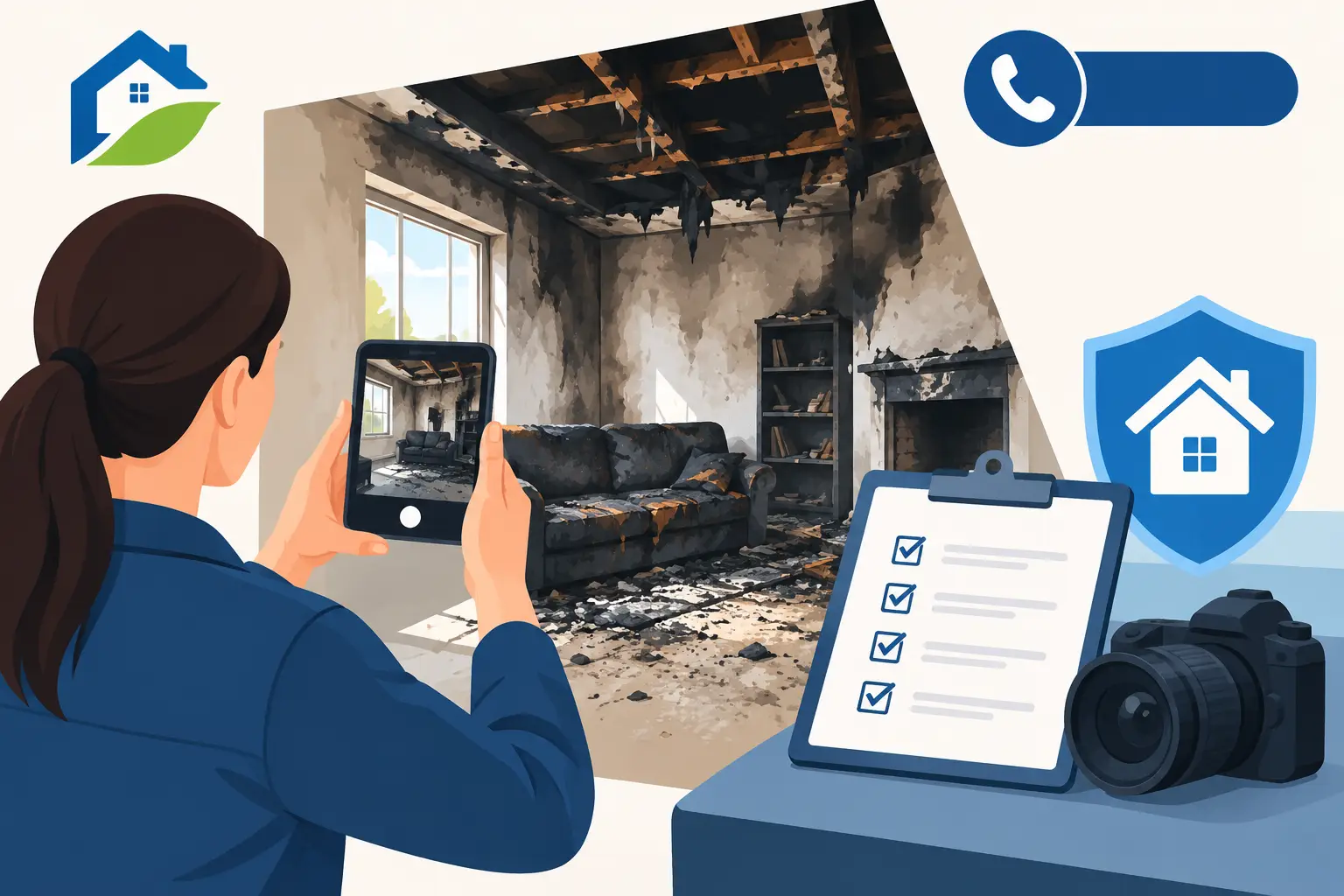
The hours after a fire are disorienting. You are dealing with safety concerns, displaced family members, damaged belongings, and calls from your insurer. Knowing how to document fire damage gives you a clear record of what happened before cleanup, demolition, or temporary repairs change the evidence.
Your documentation should tell the full story: the fire itself, the visible damage, the smoke and water damage that may be less obvious, and every cost required to protect and restore the property. Start only when the fire department or other responding authority says it is safe to enter.
Protect people and the property first
Do not reenter a fire-damaged building because you need photographs. Fire can weaken floors, ceilings, stairs, chimneys, and roof framing. Soot, ash, contaminated water, exposed wiring, and sharp debris can also create immediate hazards.
Wait for clearance from the fire department. If the building has been released but still has structural concerns, document what you can from outside and let trained restoration professionals handle the interior assessment. Wear appropriate protective equipment if entry is approved, including closed-toe boots, gloves, eye protection, and a properly fitted respirator suitable for smoke and particulate exposure.
Before beginning a detailed inventory, take reasonable steps to prevent further loss. Board up broken windows, cover roof openings, and secure doors if it can be done safely. Keep every receipt for emergency lodging, temporary repairs, tarps, boarding, storage, and cleanup. These expenses may be part of your insurance claim.
How to document fire damage before cleanup begins
The strongest claim file combines wide-angle photos, close-up images, written notes, video, and supporting paperwork. Take more documentation than you think you need. A restoration contractor and insurance adjuster can help identify damage, but early photos preserve conditions that may disappear once debris is removed or materials are stabilized.
Photograph the entire loss systematically
Start outside. Capture each side of the building, the roof if visible from a safe location, damaged windows, fire department access points, and any exterior equipment or vehicles affected by the fire. Take wide shots first so each close-up has context.
Inside, move room by room in the same order each time. Photograph the entry, then each wall, ceiling, floor, window, door, cabinet, fixture, and major item. Include broad images showing the full room and close-ups of burns, soot patterns, smoke staining, water damage, melted materials, and damaged electrical components.
Do not focus only on the room where the fire started. Smoke can move through attics, ductwork, wall cavities, and connected rooms. Fire suppression water can travel through floors and ceilings, causing swelling, staining, wet insulation, and hidden moisture far from the burn area. Photograph these conditions wherever you find them.
Use your phone’s date settings, but do not rely on timestamps alone. Add brief notes identifying the room and what the image shows. If possible, photograph serial numbers, model labels, receipts, appraisal documents, and identifying marks on damaged appliances, electronics, tools, and equipment.
Record a walk-through video
A slow, narrated video is useful because it connects each damaged area to its location in the property. Begin at the exterior, state the date and address, then walk through each accessible room. Speak plainly: identify the room, the visible damage, and significant belongings.
Keep the video steady and avoid moving debris to create a better shot. The goal is an accurate record, not a dramatic one. If conditions are unsafe, stop and document only from a safe position.
Build an itemized contents inventory
Create a written inventory as soon as possible. For each damaged item, list the item name, brand, model or serial number when available, estimated age, original purchase price if known, current replacement cost, and condition before the fire. Note whether the item was burned, smoke-damaged, water-damaged, or exposed to firefighting chemicals.
For a household, begin with high-value items such as furniture, electronics, jewelry, collectibles, firearms, appliances, musical instruments, and tools. Then work through ordinary contents that add up quickly: clothing, linens, kitchenware, books, toys, cleaning supplies, and pantry goods.
For rental and commercial properties, also document tenant improvements, fixtures, inventory, computers, point-of-sale equipment, machinery, records, leased equipment, and lost use of the space. Property managers should keep unit-specific records and distinguish building-owned contents from tenant-owned belongings.
If you cannot identify an item immediately, photograph it and list a description. You can update the inventory later. Do not throw away damaged property until your insurer authorizes disposal or a documented inspection is complete, unless it creates an immediate health or safety risk.
Preserve records beyond photos
Photographs prove condition. Records help establish value, timing, and the scope of work required. Save all documents in one digital folder and back them up to cloud storage, email, or an external drive kept away from the property.
Keep the fire report number, incident report, insurance policy information, claim number, adjuster contact details, and a log of every conversation. For calls, record the date, person contacted, company, and what was discussed or promised. Follow major decisions with a short email so there is a written record.
Also retain estimates, invoices, moisture readings, thermal imaging reports, air-quality or soot sampling results, contractor reports, hotel bills, meal receipts when covered, laundry costs, storage charges, and replacement receipts. If a temporary repair is necessary to stop rain, secure the building, or prevent theft, photograph the damage first and then photograph the completed repair.
Document hidden smoke and water damage
The visible burn area is rarely the whole loss. Smoke residue may be acidic, corrosive, and capable of damaging surfaces over time. It can settle inside cabinets, behind appliances, in HVAC systems, and on contents that look unaffected at first glance. Water used to extinguish the fire can feed mold growth if wet materials are not dried promptly.
This is where professional documentation matters. IICRC-certified restoration technicians can map moisture in structural materials, identify smoke migration, evaluate contents, and document conditions before cleaning or demolition. Thermal imaging, moisture meters, and detailed drying records can support the scope of necessary work while helping prevent avoidable secondary damage.
Be careful with DIY cleaning. Wiping soot with the wrong product can smear residue deeper into paint, fabric, or porous materials. Running an HVAC system before inspection may distribute contaminants throughout the building. Do not use ordinary household vacuums on soot, and do not paint over smoke staining before the underlying contamination has been assessed.
Communicate clearly with your insurer
Report the loss promptly and ask your insurer how it wants claim materials submitted. Many carriers accept photos and inventories through an online claim portal, but keep your own original files. Upload copies rather than surrendering the only record you have.
Ask what emergency mitigation work is authorized, whether you may choose your own restoration contractor, and how personal-property claims will be evaluated. Insurance policies vary. Some pay replacement cost after you replace an item, while others initially pay actual cash value based on age and depreciation. If something is unclear, ask for the explanation in writing.
Your restoration team can document the emergency condition, protect the structure, and communicate the technical scope of cleaning, drying, odor removal, and reconstruction. That documentation is especially valuable when smoke or water damage is present behind walls, beneath flooring, or inside building systems.
A calm record now protects your options later
You do not need to solve every part of a fire loss on the first day. Start with safety, preserve the scene, take broad photos, and keep every record connected to the event. Then bring in qualified help before damage spreads or evidence disappears.
For property owners in Northwest Montana, Stat Restoration can respond 24/7 to secure the loss, document conditions, and begin fire and smoke restoration work while you focus on your family, tenants, employees, or next steps.
