
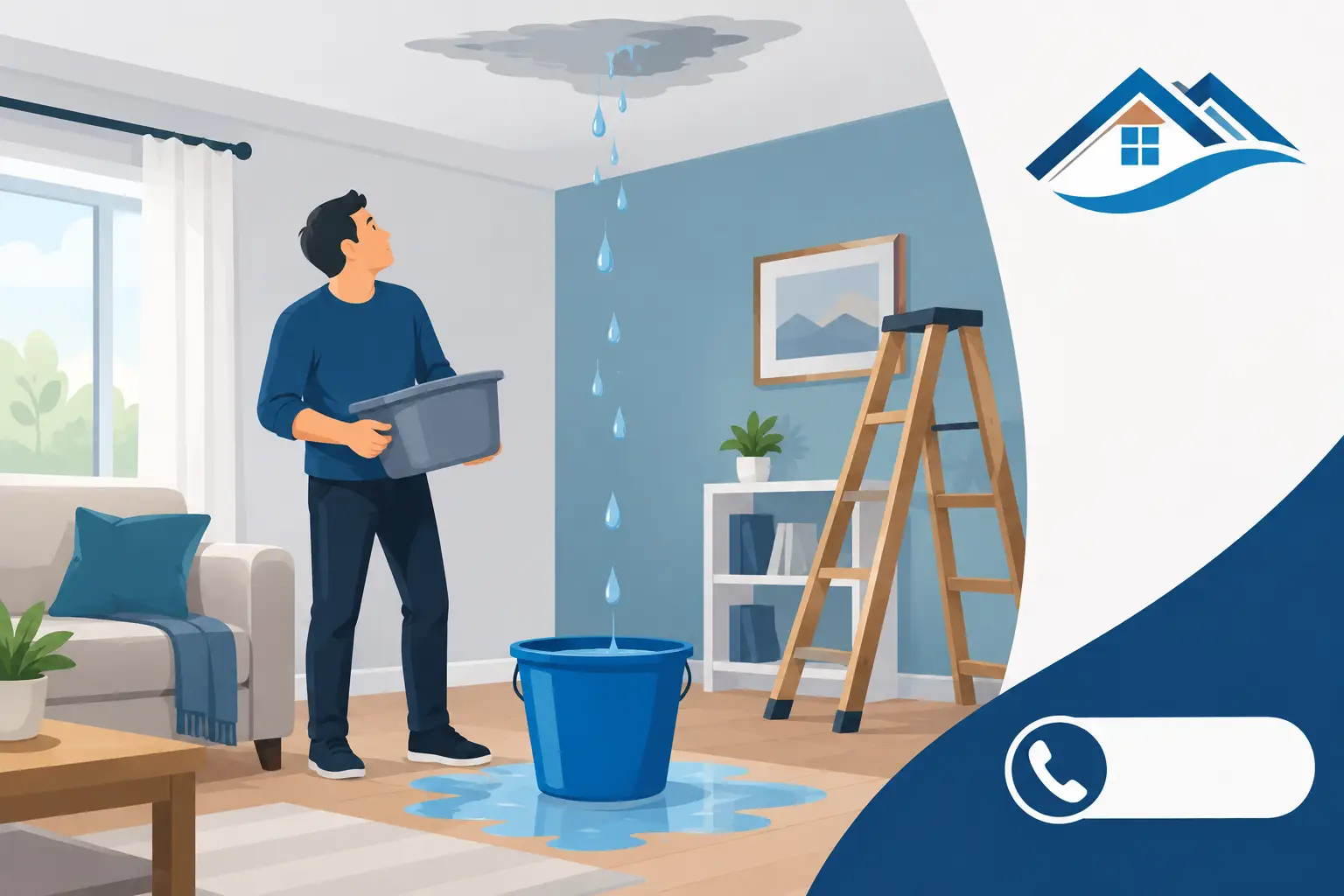
A roof leak can go from one drip into a ceiling collapse, soaked insulation, and mold growth faster than most property owners expect. The right emergency steps after a roof leak protect the people inside first, then limit water migration while qualified restoration and roofing professionals identify the source. Do not wait for clear weather or a larger stain to take action.
Put Safety Before Property
Water near electricity, wet drywall, and a sagging ceiling create hazards that cannot be solved with a bucket. If water is dripping near a light fixture, ceiling fan, outlet, electrical panel, or appliance, keep everyone away from the area. Do not touch switches, cords, or fixtures that may be wet. If you can safely access your electrical panel without walking through water, shut off power to the affected area. Otherwise, wait for an electrician or emergency restoration team.
A ceiling that is bulging, soft, cracking, or visibly sagging may be holding a substantial amount of water. Move people, pets, furniture, and valuables out from beneath it. Do not puncture a swollen ceiling unless you understand the electrical and structural conditions above it. A controlled release can sometimes reduce the chance of a collapse, but water may be contaminated and a hidden light fixture or wiring can turn a simple task into a serious emergency.
If the leak is extensive, the roof damage followed high winds, or water is entering multiple rooms, leave the affected area and call for immediate help. Never climb onto a wet, icy, windy, or storm-damaged roof. In Northwest Montana, snow, freeze-thaw cycles, wind-driven rain, and ice dams can make roof access especially dangerous.
Emergency Steps After a Roof Leak: Control the Water
Once the area is safe, focus on keeping water from spreading. Place buckets, storage bins, or other stable containers under active drips. Put towels around the containers to catch splashes, and check them often. A small leak can overflow a bucket overnight and damage flooring or lower-level rooms.
Move rugs, electronics, artwork, documents, upholstered furniture, and other absorbent belongings out of the wet zone. If an item cannot be moved, elevate it on blocks or foil-wrapped supports to keep it off wet carpet or flooring. Avoid dragging furniture across saturated carpet because that can spread moisture and cause dyes, soil, and contaminants to transfer.
If water has reached the floor, use towels or a wet-dry vacuum only when the area is electrically safe and the water is clean. Do not use a household vacuum. Do not attempt to extract water from carpet that has been exposed to sewage, visible contamination, or water that entered through a heavily damaged roof during a storm. That material may require controlled removal and professional cleaning.
Turning on your HVAC system is not always the right move. If water has entered ductwork, ceilings, or attic insulation near vents, operating the system can distribute moisture or contaminants through the building. A restoration technician can inspect the affected area and determine whether the system can run safely.
Document Damage Before Cleanup Changes the Scene
Take clear photos and video of the leak source if it is visible from a safe location, the wet ceiling or walls, damaged belongings, standing water, and exterior conditions you can document from the ground. Capture wide shots that show each room and close-ups that show stains, bubbling paint, damaged flooring, and affected contents.
Write down when you first noticed the leak, whether it began during a storm or snowmelt, and what you did to limit damage. Keep receipts for emergency supplies, temporary protection, and lodging if the home becomes unsafe. This information can support an insurance claim and gives the restoration team a more accurate picture of how long materials may have been wet.
Do not throw away damaged materials or belongings before your insurer has had an opportunity to review the loss, unless they create an immediate safety or sanitation hazard. If disposal is necessary, photograph the item thoroughly first and retain a sample when practical.
Protect the Roof Without Taking Unnecessary Risks
Stopping water at the exterior source is essential, but temporary roof protection should be handled from the ground or by a qualified professional whenever conditions are unsafe. A tarp installed incorrectly can trap water, tear loose in wind, or create further damage. It can also conceal the actual roof failure, such as missing shingles, flashing damage, an ice dam, punctured membrane, or a failed roof vent.
If weather permits and a licensed roofer or emergency contractor can safely inspect the roof, temporary covering may reduce further intrusion. That is only one part of the response. Water often travels along roof decking, rafters, wiring, insulation, and wall cavities before it becomes visible indoors. The stain on your ceiling is rarely the full extent of the moisture.
For this reason, a roof repair and a water-damage response are often separate but coordinated needs. The roof must be stabilized to stop new water from entering. Then the building materials below need to be inspected, dried, cleaned, repaired, or removed based on their condition.
Start Professional Drying Quickly
Drywall, insulation, wood framing, carpet padding, and subflooring can retain moisture long after a surface looks dry. Mold can begin growing within 24 to 48 hours under the right conditions. Running a few household fans may dry the visible surface while pushing humid air deeper into cavities or allowing hidden moisture to remain behind baseboards and inside insulation.
A professional restoration response begins with moisture detection, not guesswork. IICRC-certified technicians use moisture meters and thermal imaging to map the water’s path, including areas that are not visibly stained. They can determine whether materials are dryable, establish containment when needed, and place commercial air movers and dehumidifiers to remove moisture in a controlled way.
Drying equipment should be monitored, not simply dropped off. Material moisture readings, temperature, and humidity levels show whether the structure is progressing toward a safe drying standard. If wet insulation, carpet padding, or drywall cannot be dried effectively, selective removal may be the safer and less costly decision than leaving moisture trapped behind finished surfaces.
Stat Restoration responds 24/7 across Northwest Montana with on-site emergency service, water extraction, structural drying, damage documentation, and insurance communication. Fast response matters because every hour water remains in a building increases the risk of secondary damage.
Avoid These Common Roof-Leak Mistakes
Property owners often make decisions with the best intentions that complicate cleanup later. The biggest mistake is waiting to see whether the leak stops on its own. Rain may stop, but wet insulation and framing can hold moisture for days.
Another common mistake is painting over a water stain before the structure is dry. Paint can hide the evidence temporarily, but it does not remove moisture or prevent mold. The same applies to placing a dehumidifier in one room while leaving wet materials sealed inside a ceiling or wall cavity.
Avoid opening large sections of drywall without a plan. Exploratory openings can be necessary, but uncontrolled demolition may spread dust, expose wet insulation, and make it harder to document the loss. A trained team can make targeted openings based on moisture readings and the construction of the home or commercial building.
Finally, do not assume your insurance coverage will be identical to a neighbor’s. Coverage can depend on the cause of the leak, maintenance history, policy language, deductibles, and whether the loss affected the roof, interior finishes, contents, or business operations. Prompt documentation and clear communication help keep the claim moving.
What to Tell Your Restoration Team and Insurer
When you call, describe the active conditions plainly: where water is entering, which rooms are affected, whether the ceiling is sagging, whether electricity may be involved, and whether the leak followed a storm, ice buildup, or visible roof damage. Mention any materials already removed and any steps taken to contain water.
For rental and commercial properties, notify tenants or staff about restricted areas and protect records, inventory, equipment, and customer information as soon as it is safe. A leak in an office ceiling may also affect operations below it, including electronics, inventory storage, or occupied workspaces. Early containment can reduce downtime as well as repair costs.
The goal is not to make the damage look better for the moment. It is to make the property safe, stop additional water intrusion, and confirm that hidden materials are truly dry. Acting decisively in the first hours gives your home or building its best chance of a clean, controlled recovery.
