
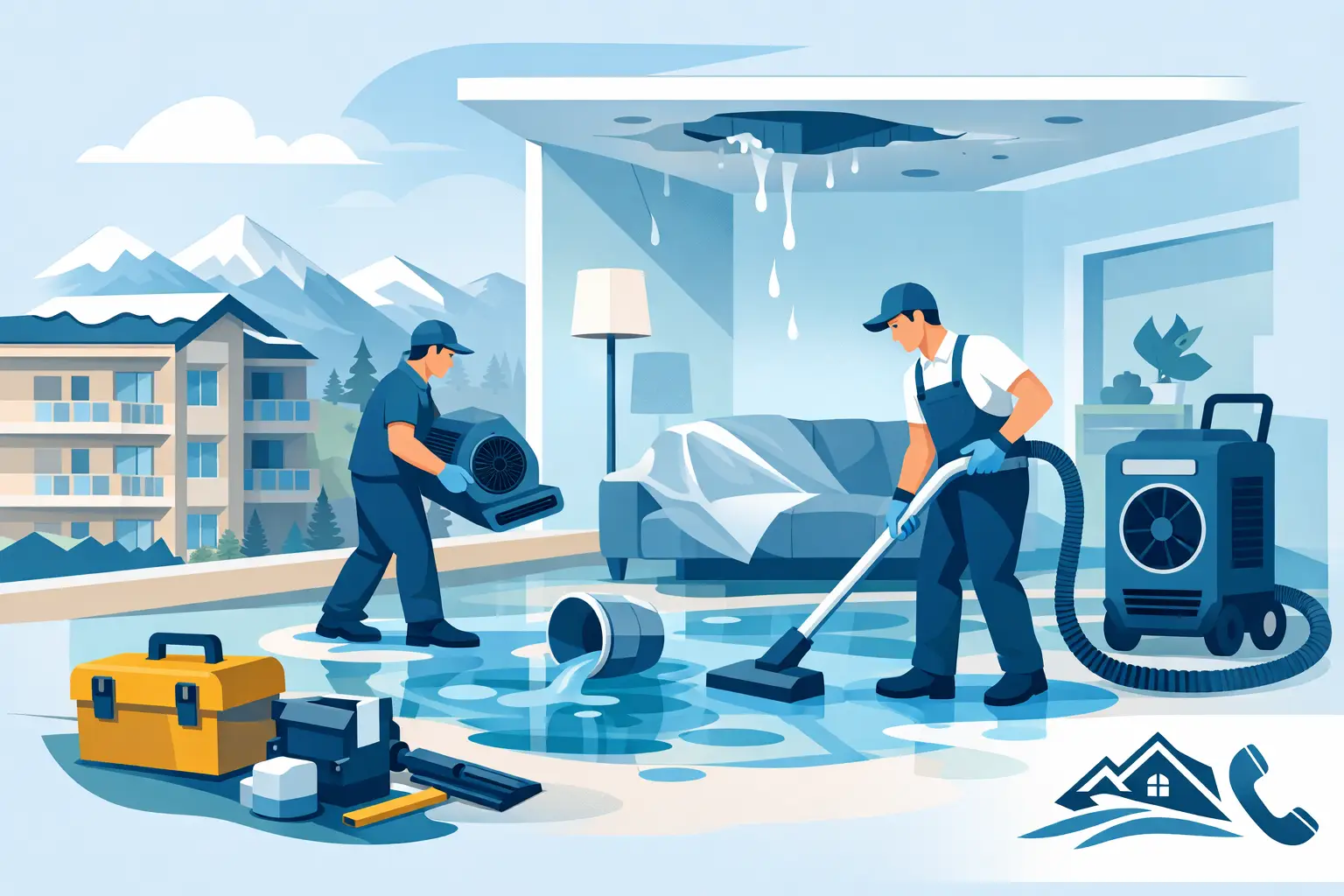
A leak in one apartment rarely stays in one apartment. Water can move through cabinets, wall cavities, floor assemblies, and ceiling penetrations long before it becomes visible below. Whitefish apartment leak cleanup needs to begin with more than a mop and a fan. It requires immediate source control, moisture mapping, professional drying, and clear communication that protects tenants, owners, and the building itself.
For landlords and property managers, the first hours after a leak can determine whether the result is a manageable repair or a costly disruption involving mold, damaged finishes, displaced residents, and insurance questions. The right response contains the problem quickly and creates a documented path back to safe occupancy.
When an Apartment Leak Is an Emergency
Not every drip requires a full restoration response. A small, contained leak under a sink may be resolved once the plumbing is repaired and the cabinet is thoroughly dried. But water that reaches drywall, subflooring, insulation, shared ceilings, or multiple units should be treated as an active property-loss event.
Call for professional help right away when water is coming from a burst supply line, failed water heater, overflowing appliance, toilet backup, roof intrusion, frozen pipe, or an unknown source. The same applies when a tenant reports a wet ceiling, bubbling paint, warped flooring, musty odors, or water near electrical fixtures. What is visible is often only part of the damage.
In Whitefish, winter freezes and rapid temperature shifts can turn a small plumbing weakness into a significant water event. Older buildings may also have concealed plumbing routes, layered flooring, and wall assemblies that hold moisture longer than expected. Waiting until the next business day can allow secondary damage to take hold.
The First Steps to Protect People and Property
Your first priority is safety. If water is near outlets, light fixtures, electrical panels, or appliances, keep tenants away from the affected area and arrange for electrical conditions to be assessed before re-entry. Do not ask residents to remove wet ceiling materials, pull up flooring, or handle contaminated water.
Next, stop the source if it can be done safely. Shut off the local fixture valve or the building water supply when necessary, then contact a qualified plumber for the repair. Restoration begins after the source is controlled, but water removal and drying should not wait for every repair detail to be finalized.
Property managers should also document the initial condition. Take time-stamped photos of the source area, affected rooms, visible water, damaged contents, and any unit below. Record when the leak was discovered, when the water was shut off, and which residents may be affected. This simple record supports insurance communication and helps establish a clear response timeline.
If the water came from a toilet overflow, drain backup, or sewage line, treat it differently than a clean supply-line leak. Sewage-contaminated water can contain harmful pathogens and requires controlled removal, cleaning, and disinfection under appropriate safety procedures. Standard household cleaning is not enough for this type of loss.
What Professional Whitefish Apartment Leak Cleanup Looks Like
Effective restoration is a controlled process, not simply drying what looks wet. IICRC-certified technicians begin by identifying the water category, inspecting the building materials involved, and determining how far moisture has traveled. Thermal imaging cameras, moisture meters, and hygrometers help reveal water behind walls, under floors, and above ceilings without unnecessary demolition.
Extraction Comes Before Drying
Standing water and saturated carpet need rapid extraction. Professional-grade extractors remove far more water than shop vacuums or rental equipment, reducing the drying time and limiting how deeply moisture can migrate. In multi-unit buildings, technicians also inspect adjoining units and common areas because water commonly follows gravity and utility pathways.
Some materials can be dried and saved. Others, such as swollen particleboard cabinets, delaminated flooring, or contaminated insulation, may need to be removed. The decision depends on the material, duration of exposure, water category, and whether drying can be verified. Removing materials too aggressively raises costs and disrupts tenants. Leaving damaged materials in place can create odor, mold, and future repair problems.
Controlled Drying Protects the Building
After extraction, air movers and commercial dehumidifiers create the conditions needed to draw moisture from structural materials. Equipment placement is deliberate. Too little airflow leaves wet pockets behind; uncontrolled drying can affect finishes or fail to reach concealed spaces.
Technicians monitor moisture levels daily or as conditions require. The goal is not for surfaces to feel dry. The goal is for materials to return to an appropriate moisture condition based on the building and local environment. Documented moisture readings provide evidence that drying was completed correctly before repairs begin.
Cleaning, Odor Control, and Reconstruction
Once the structure is dry, affected areas may need cleaning, antimicrobial treatment where appropriate, odor control, drywall replacement, flooring repair, painting, or cabinet work. A full-service restoration team coordinates these stages so the owner is not left managing separate extraction, demolition, cleaning, and reconstruction vendors.
Stat Restoration follows IICRC S500 water-damage principles and uses EPA- and OSHA-conscious procedures to manage each phase safely. For apartment owners, that means one accountable team handling containment, drying verification, documentation, and the work required to return the unit to service.
Tenant Communication Can Limit the Damage
Residents need clear instructions during a leak, especially when access to their kitchen, bathroom, bedroom, or parking area may be affected. Tell them what happened in plain language, what areas are unsafe or unavailable, what the restoration team will do, and when they can expect the next update.
Avoid making promises about completion dates before moisture readings and material conditions are known. A clean-water appliance leak in a vinyl-floored laundry area may dry quickly. Water that has traveled from an upper-floor bathroom into a lower unit’s ceiling and insulation may require selective demolition and a longer repair schedule.
Give tenants a direct contact for urgent questions and ask them to report new staining, dripping, odors, or changes in ceiling condition immediately. Fast reporting protects their belongings and helps prevent a small missed area from becoming a larger claim.
Insurance Documentation Should Start Immediately
Insurance carriers commonly need photos, affected-area measurements, drying logs, equipment records, moisture readings, and itemized estimates. When documentation is incomplete, claims can slow down and owners may face avoidable questions about the scope of work.
A restoration provider that communicates directly with the insurance carrier can reduce that burden. The goal is not to let an insurer dictate an unsafe shortcut. It is to provide accurate, organized evidence for necessary mitigation and repairs while keeping the property owner informed at every stage.
Owners should keep copies of the initial incident report, plumber findings, tenant communications, invoices, and restoration documentation. If personal property is damaged, tenants may need to contact their renters insurance provider separately. Clear records help distinguish building repairs from personal-property claims.
Avoid the Mistakes That Lead to Mold and Repeat Repairs
The most expensive apartment leak failures often begin with a reasonable-sounding decision: wait and see, set out a few household fans, paint over the stain, or repair the pipe without checking surrounding materials. Those actions may hide the symptom while moisture remains inside the building assembly.
Do not close a wall or replace flooring until drying has been verified. Do not rely on odor alone to decide whether a unit is dry. And do not move tenants back into a heavily affected space before safety concerns, moisture conditions, and necessary cleaning are addressed.
A prompt response also preserves options. Materials that are extracted and dried early are more likely to be salvageable. Water that sits for days becomes harder to manage, more disruptive for residents, and more expensive for the owner.
When water crosses unit boundaries, professional cleanup is not an added complication. It is the step that restores control. A fast, documented response protects the people living in the building, limits downtime for the property, and gives every party a clearer path forward.
