
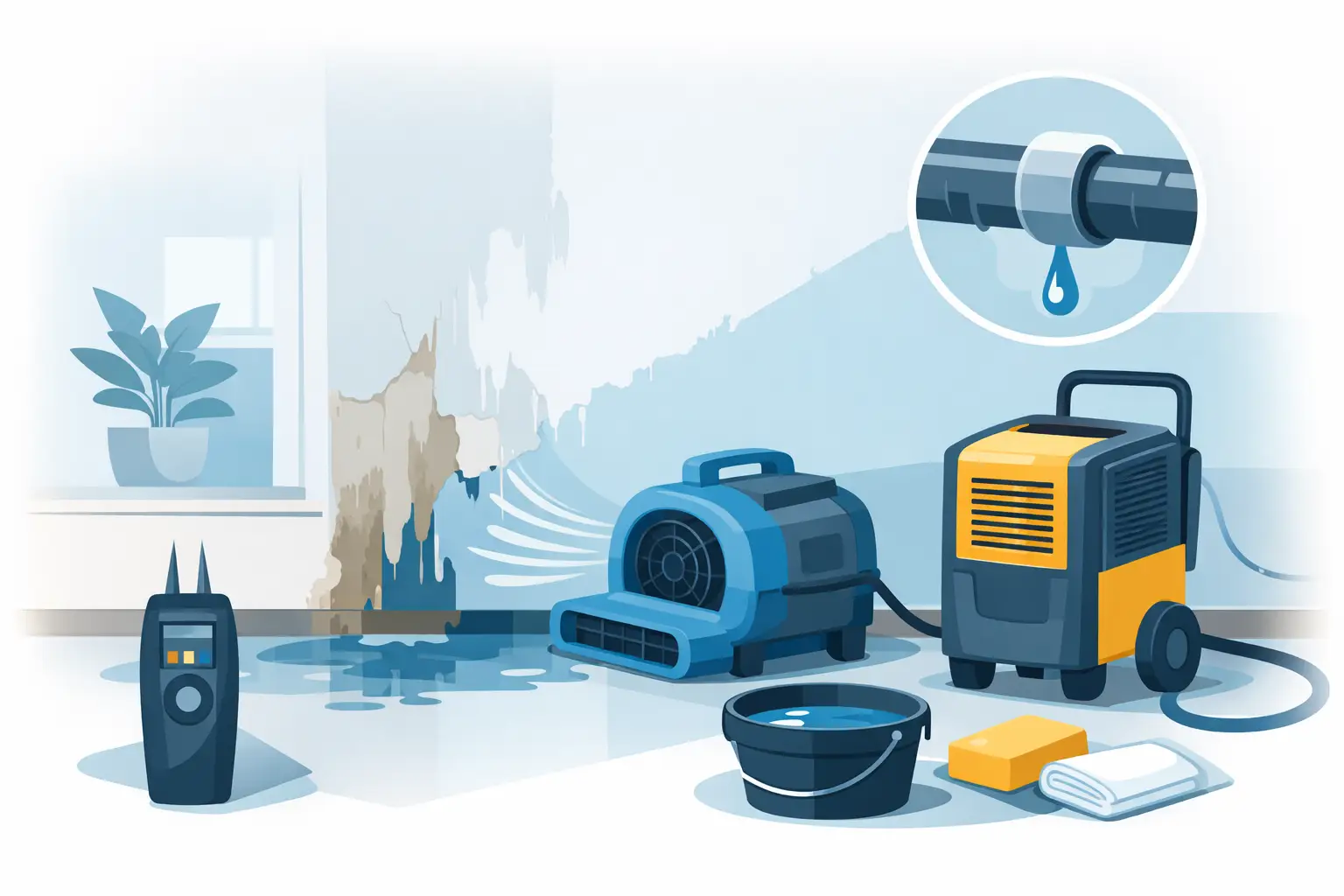
A damp stain below a bathroom, a burst pipe in a cold snap, or water seeping across a finished basement floor can turn drywall into a hidden problem fast. To dry wet drywall safely, you need more than a fan pointed at the wall. You need to stop the water, protect the electrical system, determine what type of water is involved, and verify that moisture is gone from inside the wall cavity.
Drywall is made to absorb. Its gypsum core and paper facing can hold water long after the surface feels dry. In Northwest Montana, where frozen pipes, snowmelt, and basement moisture are common, a rushed cleanup can leave the conditions mold needs to grow behind paint, baseboards, and insulation.
Start With Safety and Water Control
Before moving furniture or setting up equipment, stop the source of water if you can do so safely. Shut off the appliance supply valve, close the main water valve, or place a container under an active leak. If water is coming through a ceiling, stay clear of any sagging area. Water-loaded drywall can collapse without much warning.
Electrical safety comes next. Do not walk through standing water near outlets, extension cords, appliances, or electrical panels. Turn off power to the affected area at the breaker only if you can reach it without entering water. When there is any doubt, leave the area and call a qualified restoration team or electrician.
The source also determines whether the drywall can be saved. Clean water from a broken supply line may allow for controlled structural drying if the loss is addressed quickly. Water from a washing machine discharge, dishwasher backup, overflowing toilet, stormwater intrusion, or a sewage line requires more caution. Water that may contain contaminants can make porous materials, including drywall and insulation, unsafe to dry in place.
If sewage, floodwater, or visibly dirty water touched the wall, do not try to preserve it with fans. Keep children and pets away, avoid direct contact, and arrange professional cleanup. OSHA and EPA-aligned handling procedures matter because the issue is no longer just moisture – it is potential contamination.
How to Dry Wet Drywall Safely Without Spreading Damage
The first objective is extraction. Remove standing water from floors, wet rugs, and nearby contents as quickly as possible. The less water available to wick upward into drywall, framing, and cabinetry, the better the chance of limiting the loss. Towels and a wet vacuum can help with a small, clean-water event, but they do not remove moisture trapped inside walls.
Next, remove wet items from the area. Move furniture away from walls, lift damp items off carpet, and take down wet curtains or wall hangings. If baseboards are swollen or wet, carefully removing them can create access for inspection and drying. Photograph the damage before disposal or major demolition. Clear documentation supports an insurance claim and records the condition of the property at the start.
Do not rely on touch alone. A wall can feel cool and dry on the painted surface while its lower section, insulation, sill plate, and studs remain wet. Professional restoration teams use moisture meters and thermal imaging to locate water migration without opening every wall. That information guides where to dry, where to inspect further, and where selective removal is necessary.
For a small clean-water leak caught within hours, drying may involve controlled airflow and dehumidification. Air movers evaporate moisture from affected materials while commercial dehumidifiers remove that moisture from the air. The equipment must be positioned and monitored correctly. Blasting hot air at a wall or opening windows during humid weather can create uneven drying or introduce more moisture.
In Montana winters, opening windows is often a poor substitute for dehumidification. Cold outdoor air may hold little moisture, but it can chill wall surfaces, complicate temperature control, and create condensation risks when conditions change. A measured drying setup is more reliable than a quick home remedy.
Know When Drywall Must Be Removed
Not every wet wall needs to be torn out. Drywall can sometimes be dried and retained when the water was clean, the materials were exposed briefly, and moisture readings show a consistent return to normal dry standards. The key is verification, not optimism.
Removal is often the safer option when drywall is soft, swollen, crumbling, sagging, or separating from the studs. Peeling paint, bubbling tape seams, and a musty odor are also warning signs. If the wall was wet for more than 24 to 48 hours, mold risk rises substantially, especially in enclosed cavities with insulation.
Wet insulation is another decision point. Fiberglass insulation can lose its thermal performance and retain moisture against framing. Cellulose insulation can mat, settle, and stay damp. When insulation is saturated or affected by contaminated water, removing it is commonly necessary to allow proper cleaning and drying of the wall assembly.
A restoration technician may make a controlled flood cut – a horizontal removal of drywall above the wettest area. This creates access to inspect framing, remove damaged insulation, clean affected surfaces, and dry the cavity thoroughly. It can feel disruptive, but selective removal is often less costly than allowing hidden mold or structural deterioration to continue.
Avoid the Shortcuts That Cause Mold Problems
Covering a stain with primer, repainting a damp wall, or running one household fan for a day does not solve a moisture problem. Those shortcuts can trap moisture inside a wall and delay the visible evidence until mold, odor, or deterioration becomes harder to contain.
Avoid drilling random holes into walls unless a professional has identified the drying plan. Unplanned holes can damage wiring or plumbing, and they do not tell you whether the cavity is dry. Also avoid using bleach as a cure-all. Bleach does not reliably solve mold growth in porous drywall, and its fumes can create another indoor air concern.
Do not remove suspected mold-damaged drywall without containment if the affected area is significant or if occupants have respiratory sensitivities. Disturbing moldy material can spread spores into clean rooms and HVAC pathways. Proper remediation isolates the work area, controls dust, removes unsalvageable material, and verifies that the structure is dry before repairs begin.
Document the Loss Before Repairs Begin
Water damage creates two jobs at once: protect the building and protect your claim. Take photos and short videos of the source, affected rooms, damaged belongings, visible water lines, and any work performed to stop further damage. Keep receipts for emergency supplies, temporary lodging, or necessary repairs.
Then document the drying process. Insurers often need to see the extent of water migration, the materials affected, moisture readings, equipment placement, and the reason for any demolition. A professional restoration company can manage this record while communicating directly with the carrier, which helps prevent a homeowner or property manager from having to explain technical drying decisions alone.
For rental and commercial properties, documentation is especially useful. It supports tenant communication, helps establish when the area was made safe, and creates a record of the steps taken to prevent secondary damage.
When to Call for Emergency Restoration
Call for professional help immediately when water affects more than a small, visible area; comes from a contaminated source; reaches ceilings, insulation, flooring, or electrical components; or has been present for an unknown period. A musty smell, recurring stain, warped baseboard, or elevated moisture reading also warrants inspection, even if the original leak appears repaired.
Stat Restoration provides 24/7 emergency response across Flathead and Lincoln counties, with IICRC-certified technicians who can contain the loss, locate hidden moisture, set professional drying equipment, and document the work for insurance. Fast action is not about making a wall look normal by tomorrow. It is about making sure the structure behind that wall is clean, dry, and safe to rebuild.
If you are unsure whether drywall can be saved, treat uncertainty as a reason to inspect, not a reason to wait. The right drying decision in the first day can protect your home, your indoor air, and the repairs you do not want to face weeks later.
