
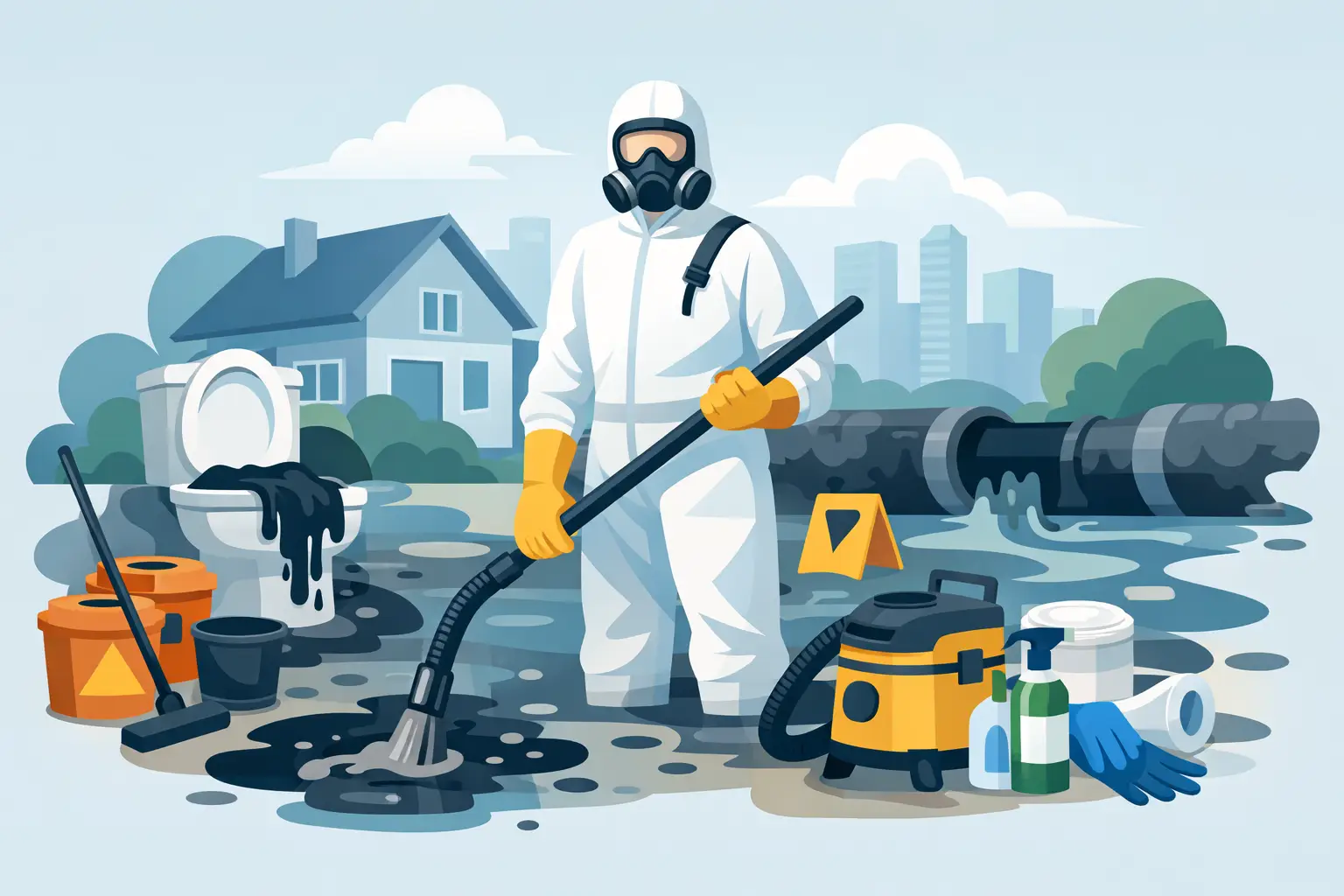
A sewage backup is not a mop-and-disinfect situation. When wastewater reaches a basement, bathroom, crawlspace, rental unit, or business, sewage exposure cleanup must begin with containment. The longer contaminated water remains in contact with flooring, drywall, insulation, contents, and HVAC components, the greater the health risk and the more extensive the restoration can become.
Raw sewage can carry bacteria, viruses, parasites, and other contaminants. It can also move farther than the visible water line through carpet backing, wall cavities, subflooring, and porous building materials. Fast, professional action protects the people in the building first, then limits structural damage and supports a cleaner insurance claim.
Treat Sewage Water as Category 3 Contamination
In restoration work, sewage is generally classified as Category 3 water, also called black water. This category includes water from toilets containing waste, sewer line backups, overflows from septic systems, and floodwater that may contain sewage or other harmful contaminants.
That classification matters because the cleanup standard is different from a clean supply-line leak. A clean-water leak may allow certain materials to be dried and saved if the response is immediate. With sewage contamination, porous materials that absorbed wastewater often cannot be safely restored. Carpet, carpet padding, upholstered furniture, insulation, and affected drywall may need removal rather than surface cleaning.
The right scope depends on where the water traveled, how long it remained, the materials involved, and whether contamination entered hidden spaces. A small toilet overflow limited to a nonporous tile floor is very different from a sewer backup that saturates a finished basement. Both require caution, but the restoration plan should match the actual conditions, not assumptions.
What to Do Before Sewage Exposure Cleanup Begins
Your first goal is to keep people and contamination from moving through the property. Do not walk through affected areas unless it is necessary to reach a shutoff, protect a person, or prevent an immediate hazard. Keep children, pets, tenants, and customers away from the area.
If you can do so safely, take these steps:
- Stop using toilets, showers, sinks, washing machines, and dishwashers connected to the affected drain line.
- Turn off electricity to the affected area only if you can reach the panel without entering standing water. If water is near outlets, appliances, or electrical equipment, wait for qualified help.
- Close doors or block access to limit foot traffic, but do not run fans that could spread contaminants to unaffected rooms.
- Move dry, uncontaminated belongings away from the edge of the affected area only when they can be handled without contact with wastewater.
Do not attempt to shop-vac sewage water, shampoo contaminated carpet, or use household disinfectant as a substitute for remediation. Consumer equipment generally cannot extract water from underlying materials, control contamination, or verify that the structure is dry. Bleach also has limits: it does not remove sewage solids or reliably penetrate porous materials, and mixing cleaners can create dangerous fumes.
If the backup came from a municipal sewer, a blocked main line, or a failed septic system, the source must be corrected before restoration can succeed. Otherwise, cleanup can be followed by another backup before the property is safe to reoccupy.
How Professional Sewage Exposure Cleanup Works
A qualified restoration crew begins by identifying the source, documenting the affected areas, and establishing containment. This is not just paperwork. Thorough documentation records what was damaged, where moisture and contamination traveled, what materials were removed, and how drying conditions were monitored. That information is useful for property owners and insurance carriers alike.
Containment and Personal Protection
Technicians use appropriate personal protective equipment and controlled work zones to prevent cross-contamination. Depending on the loss, this may include plastic containment barriers, negative air control, HEPA air filtration, and designated paths for removing contaminated debris.
Containment is especially critical in occupied homes, multifamily properties, medical offices, retail spaces, and buildings with shared hallways. The goal is to keep contaminated air, water, and debris from becoming a larger building-wide problem.
Extraction and Removal of Unsalvageable Materials
Commercial extraction equipment removes standing water quickly. Crews then remove sewage solids and evaluate all affected materials. Nonporous surfaces such as sealed tile, metal, glass, and some hard plastics can often be cleaned and disinfected when they remain structurally sound.
Porous materials require a more conservative decision. Carpet padding is typically removed after sewage contact. Drywall, baseboards, insulation, engineered flooring, and cabinetry may need controlled demolition when contamination has wicked upward or migrated behind finished surfaces. Removing only what is necessary helps control costs, but leaving contaminated material in place creates an unacceptable risk.
Cleaning, Disinfection, and Structural Drying
After removal and extraction, technicians clean surfaces to physically remove soils before applying EPA-registered antimicrobial or disinfecting products appropriate for the material and condition. Disinfection is not a shortcut around cleaning. Organic matter can reduce the effectiveness of disinfectants, which is why proper sequencing matters.
The structure must then be dried using commercial air movers, dehumidifiers, and moisture-monitoring equipment. Thermal imaging and moisture meters help locate wet materials that may not look damaged. Drying verification is essential because sewage losses can create two separate problems: contamination from the backup and mold growth from lingering moisture.
IICRC S500 principles guide the water-damage portion of the work, while OSHA and EPA requirements inform worker safety and cleaning practices. A professional crew should be able to explain what was affected, what was removed, what was cleaned, and what measurements confirm the area is ready for reconstruction or reoccupancy.
Insurance Documentation Can Protect Your Claim
Sewage backups can be confusing from an insurance standpoint. Coverage may depend on the cause of the loss and the specific endorsements on the policy. For example, damage from a sewer or drain backup may be handled differently than damage caused by a failed plumbing component or surface water entering the building.
Do not wait to report a loss simply because you are unsure about coverage. Take photos or video from a safe location, keep damaged materials available for inspection when practical, and save invoices related to emergency work. Then allow the restoration team to provide a detailed scope, moisture records, photographs, and itemized documentation.
For landlords and commercial operators, documentation also supports communication with tenants, maintenance teams, ownership groups, and insurers. It creates a clear record of when the problem was discovered, what immediate protective steps were taken, and how the property was returned to a safe condition.
When Is It Safe to Return to the Area?
Reentry should not be based on whether the room smells better or whether the floor looks dry. The affected area should be cleared of sewage and contaminated debris, cleaned and disinfected as appropriate, dried to acceptable moisture conditions, and restored so occupants are not exposed to unfinished or compromised materials.
The timeline varies. A contained bathroom overflow on hard flooring may be resolved relatively quickly after the source is repaired. A basement or crawlspace loss can take longer because of saturated materials, restricted airflow, and the need for demolition and reconstruction. Rushing the process may save a day initially but create odor, mold, or material-failure problems later.
In Northwest Montana, cold weather and seasonal conditions can complicate drying, particularly in lower levels, vacant properties, and older buildings. Local experience matters when evaluating insulation, foundation walls, vapor barriers, and the way moisture may be held inside a structure.
Get Control of the Emergency Quickly
Sewage contamination creates pressure to act fast, but the right response is controlled rather than improvised. Stat Restoration provides 24/7 emergency response for property owners in Kalispell, Whitefish, Columbia Falls, Eureka, Libby, and surrounding Flathead and Lincoln County communities. IICRC-certified technicians can contain the loss, remove contaminated materials, dry the structure, document the work, and help reduce the burden of insurance communication.
If sewage reaches your property, protect people from the affected area, stop using connected plumbing, and bring in qualified help before contamination and moisture travel any farther.
