
You look up and there it is: a brown ring on the ceiling, or a damp patch high on the wall by the window. In a Flathead winter, the first question is usually “Is my roof leaking?” Sometimes it is. But a lot of winter water problems aren’t a hole in the roof at all. They’re ice dams.
The difference matters, because it changes what you do next and who you need. Here’s how to tell them apart, what to do in the first hour, and when to call us.
What Is an Ice Dam?
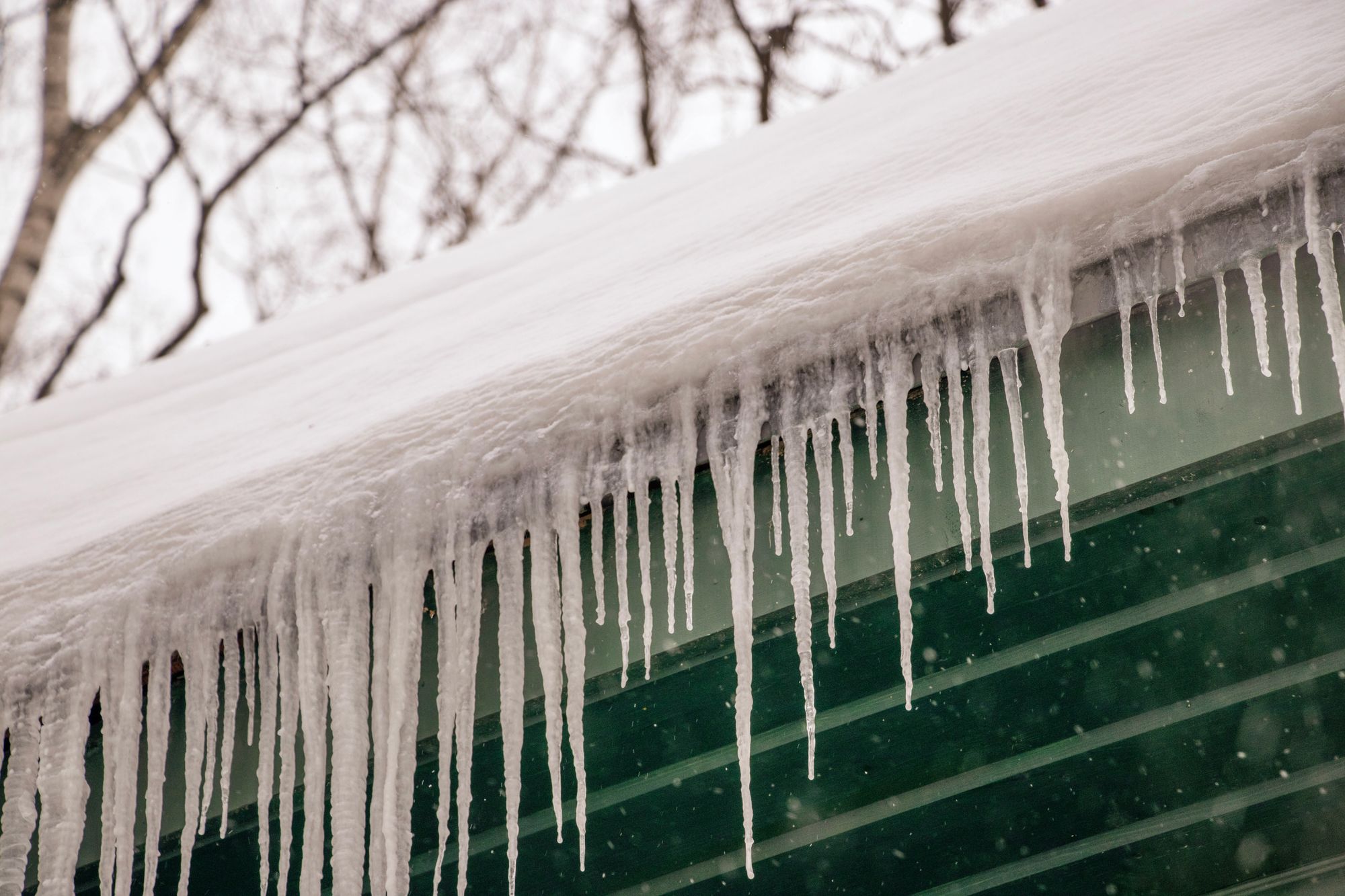
An ice dam is a ridge of ice that builds up along the lower edge of a roof, at the eaves. Snow higher up on the roof melts, the water runs down, and when it reaches the colder overhang, it freezes again. Over days and weeks, that ice gets thicker.
Once the ridge is there, new meltwater has nowhere to go. It pools behind the ice and can back up under the shingles, where it finds its way into the attic, the insulation, the top of the exterior walls, and eventually your ceiling.
The roof itself may be in fine shape. The problem is water being held where the roof was never meant to shed it.
Why Ice Dams Happen So Often in Flathead Winters
Our winters set up the perfect conditions:
- Heavy snow. A deep snowpack sitting on the roof for weeks gives plenty of snow to melt.
- Attic heat loss. Warm air from the living space leaks into the attic through gaps around light fixtures, attic hatches, bathroom fans, and thin or uneven insulation. That warms the upper roof and melts the snow from underneath, even when it’s well below freezing outside.
- Freeze-thaw cycles. Sunny afternoons soften snow, and cold nights lock the water back up as ice. Each cycle adds to the dam.
- Cold eaves. The overhang sits outside the heated part of the house, so it stays cold. That’s exactly where the meltwater refreezes.
Big icicles hanging along the gutters are often the first visible sign that an ice dam is forming.
Ice Dam or Roof Leak? How to Tell the Difference
There’s no perfect test from inside the house, but a few clues point one way or the other.
It’s more likely an ice dam if:
- The water showed up during a stretch of snow on the roof, especially after a sunny day or a warm spell
- There’s a thick ridge of ice or heavy icicles along the eaves above the wet spot
- The stain or dampness is near an exterior wall, close to where the roof meets the wall
- It stops when everything freezes hard and comes back when it warms up
It’s more likely a roof leak if:
- The water shows up during rain, or any time of year, not just in snowy stretches
- The wet spot is in the middle of a ceiling, away from the eaves
- It’s near a chimney, skylight, vent pipe, or other spot where something goes through the roof
- You can see missing, cracked, or lifted shingles or damaged flashing from the ground
Sometimes it’s both. An ice dam can push water into an older roof’s weak spots, and a roof that already has a problem will show it faster in winter. A roofer can confirm what’s going on with the roof itself.
Signs Inside the House
Whatever the cause, these are the signs that water has made it inside:
- Ceiling stains. Yellow or brown rings, often along the outside edge of a room.
- Wet insulation. Matted, heavy, or damp insulation in the attic. Wet insulation stops insulating and holds water against the wood. Our post on how to identify wet insulation covers what to look for.
- Damp walls near the eaves. Bubbling paint, soft drywall, or damp spots high on exterior walls, especially around upstairs windows.
- Drips around window frames. Water running down inside the wall often shows up at the top of a window.
- A musty smell. If water has been getting in for a while, you may smell it before you see it.
Small stains are easy to ignore until spring. But water inside a wall or ceiling doesn’t dry on its own very well, and the longer it sits, the better the chances of mold.
What to Do in the First Hour
If you’ve found water coming in, here’s what to do right away:
- Stay safe. If water is near a light fixture, outlet, or ceiling fan, turn off power to that area at the breaker if you can do it safely. If a ceiling is sagging or bulging, keep everyone out from under it.
- Catch the water. Put buckets or towels down and move furniture, rugs, and electronics out of the way.
- Take photos. Get pictures of the stain, the water, and the ice on the roof from the ground. They help with your insurance claim later.
- Stay off the roof. Don’t climb up on an icy roof, and don’t chip at the ice with a hammer or axe. You can hurt yourself and damage the shingles.
- Call for help with the water inside. That’s where we come in.
Our post on emergency steps after a roof leak has more detail on protecting your home while you wait.
When to Call Stat Restoration
Call us if:
- Water is actively dripping or running into the house
- A ceiling is stained, sagging, or soft to the touch
- Attic insulation is wet
- Walls near the eaves feel damp or the paint is bubbling
- You smell something musty and suspect water has been getting in for a while
Our job is the inside of the house. We find where the water went using moisture meters, remove wet materials that can’t be dried, and set equipment for structural drying so the framing, drywall, and ceilings get properly dry. If mold has already started, our mold remediation team can handle it. Fixing the roof or the ice dam itself is a job for a roofer.
Frequently Asked Questions
Can I just wait until spring to deal with a small stain?
It’s not a good idea. A small stain on the ceiling can mean a lot more water in the insulation and framing above it. The longer it stays wet, the more likely you’ll be dealing with mold.
Will the water stop once the ice melts?
The dripping may stop, but the water that already got in is still there. Wet insulation and framing need to be checked and dried.
Is a roof leak or ice dam covered by insurance?
That depends on your policy and your insurance company. We can’t promise coverage, but we work directly with insurance companies and provide photos and moisture readings for your claim.
How do I prevent ice dams next winter?
The usual fixes are better attic insulation, sealing the gaps that let warm air into the attic, and good attic ventilation. A roofer or insulation contractor can tell you what your house needs.
Do you repair roofs?
No. Stat focuses on mitigation: finding the water, drying the structure, and preventing further damage. We’ll tell you when you need a roofer.
Seeing Water Near the Eaves? Call Us.
Stat Restoration is locally owned and IICRC certified, with more than 30 years in business and over 1,500 Montana properties served. We’re based in Kalispell and serve Northwest Montana, from Whitefish and Columbia Falls to Bigfork, Polson, Eureka, Libby, Troy, and Thompson Falls.
If a winter ceiling stain or damp wall has you worried, call (406) 752-8040. We’re available 24/7.
