
When water gets into your home or business, the first few hours can feel like a blur. Knowing what the first visit looks like takes a lot of that stress away.
Here’s what happens when Stat Restoration arrives on a water callout, step by step.
Step 1: Arrival and a Safety Check
When you call (406) 752-8040, we’re available 24/7, and our goal is to be on site in under 60 minutes. The first thing our technicians do when they walk in is not start pulling up carpet. It’s make sure the place is safe for you and for us.
That safety check usually covers:
- Electricity. Is water near outlets, light fixtures, cords, or the electrical panel? If so, power to the affected area may need to be shut off before anyone works there.
- Ceilings. A ceiling that’s sagging or bulging with water can come down. We keep people out from under it.
- Slip and trip hazards. Wet floors, soaked rugs, and stairs are easy places to fall.
- What kind of water it is. Clean water from a supply line is handled differently than water that’s been sitting or came from outside. Knowing which one we’re dealing with shapes the rest of the job.
We’ll also ask when you first noticed the water and where it seemed to come from.
Step 2: Finding the Water Source and Stopping It
There’s no point drying a room if water is still coming in. So the next job is finding the source and stopping it.
Sometimes that’s obvious, like a split supply line under the sink or a failed water heater. Other times it takes some looking, such as a slow leak behind a wall or water that traveled along a joist before it showed up on a ceiling. If the water main still needs to be shut off, we’ll help.
If the source needs a plumber, roofer, or other trade to fix it, we’ll tell you. Our job is to stop the damage from spreading and get the structure dry.
Step 3: Moisture Mapping, Photos and Documentation
Water rarely stays where you can see it. It wicks up drywall, soaks into carpet pad, and runs under flooring and baseboards.
To figure out how far it went, our technicians use moisture meters and other detection tools to check floors, walls, and framing. That’s called moisture mapping. It tells us which areas are wet, which are dry, and where the edges are. Our post on hidden moisture detection after water damage goes into more detail.
At the same time, we document everything:
- Photos of the damage, the source, and affected rooms
- Moisture readings and where they were taken
- Notes on materials, like carpet, pad, drywall, and hardwood
- Items that were damaged
That record shows what happened and what was done about it, and it’s what your insurance company will want to see. If you’ve already taken photos before we arrive, keep them. Here’s more on documenting water damage for an insurance claim.
Step 4: Water Extraction
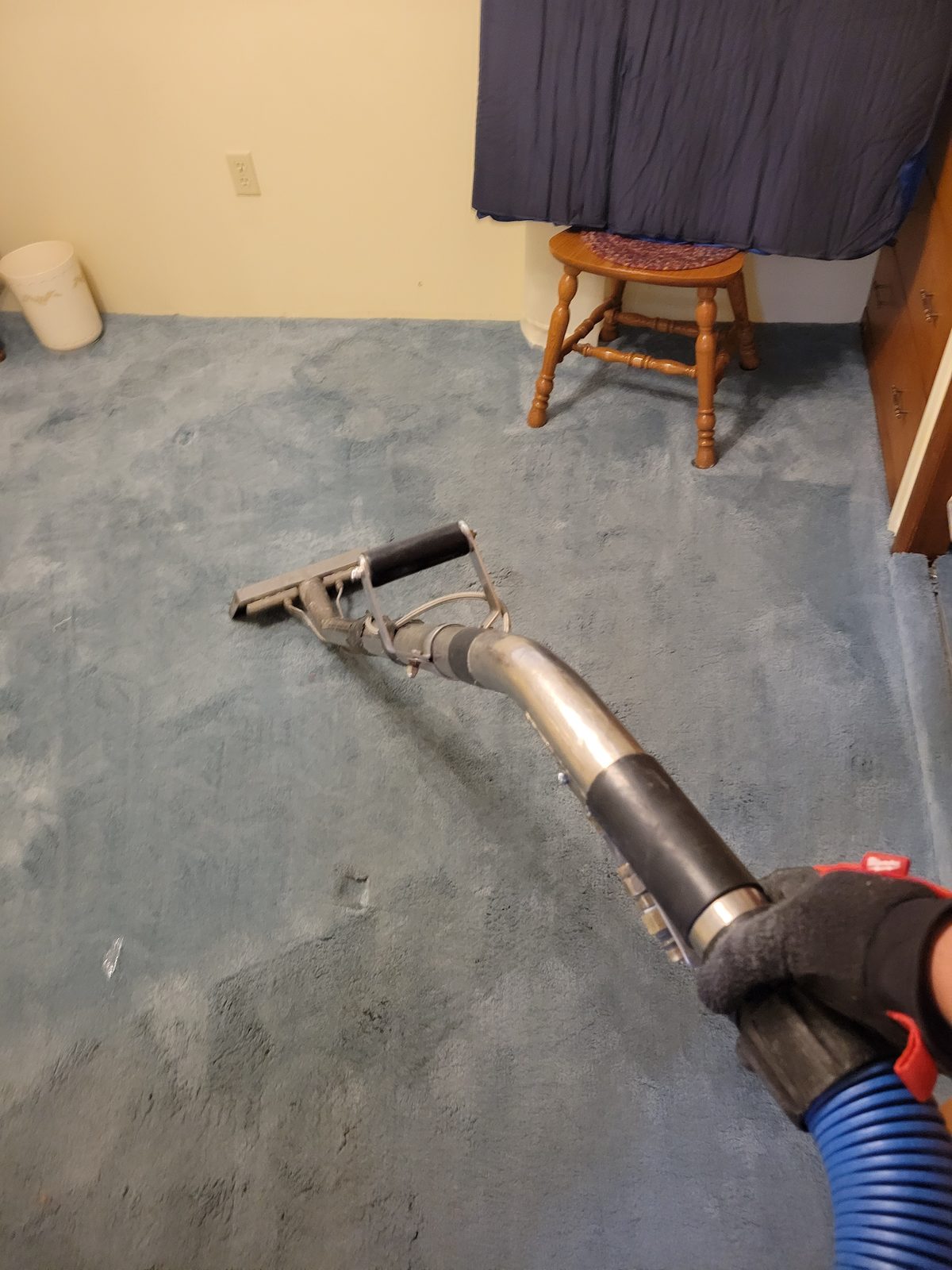
Once we know where the water is, we start removing it. Standing water and water held in carpet and pad come out first, using professional extraction equipment.
Extraction removes far more water than fans alone, and the more we pull out now, the faster everything dries afterward. Read more about our water extraction service.
Depending on what we find, some materials may need to come out. Soaked carpet pad, for example, often can’t be saved. When that happens, we’ll explain why before anything is removed and document it.
Step 5: Setting Drying Equipment
After extraction, the job becomes drying what’s left in the structure: the subfloor, the bottom of the walls, framing, and anything else that soaked up water.
That’s where the equipment comes in:
- Air movers push air across wet surfaces so moisture evaporates.
- Dehumidifiers pull that moisture out of the air so it doesn’t just settle back into the building.
- In some cases, we may open up areas like baseboards or small sections of wall so trapped moisture can get out.
Equipment is placed based on the moisture map, not just spread around the room. It’s noisy, and it runs around the clock. Our structural drying page explains the process in more detail.
Step 6: Daily Monitoring
Drying isn’t set-it-and-forget-it. A technician comes back to check progress, usually once a day. On each visit, they:
- Take new moisture readings at the same spots as before
- Check temperature and humidity in the drying area
- Move or adjust equipment as areas dry out
- Record everything for the job file
How long drying takes depends on how much water there was, what materials got wet, and how long they were wet before we got there. We’ll tell you what we’re seeing at each visit. Equipment comes out when the readings show the materials are dry, not when the calendar says so.
Step 7: Working With Your Insurance Company
Many water losses go through homeowners or commercial property insurance. We work directly with insurance companies. That means we can share our photos, moisture readings, and job notes with your adjuster, and keep them updated as the job moves along.
What we can’t do is tell you what your policy covers. Every policy is different, and coverage decisions are made by your insurance company. Our job is to make sure they have a clear, accurate record of the damage and the work.
What Happens After the Drying Is Done?
Stat’s job is mitigation: stopping the damage, getting the water out, and drying the structure. If you’re not sure where mitigation ends and restoration begins, our post on mitigation vs. restoration breaks it down.
If drywall, flooring, or cabinets need to be replaced once everything is dry, that rebuild work is handled by our related company, All American Builders, LLC, or by the contractor of your choice.
Frequently Asked Questions
Do I need to be home when you arrive?
It helps, especially for the first visit, so we can talk about what happened and get access to the water shutoff and electrical panel. If you can’t be there, call and we’ll talk through options.
Should I start cleaning up before you get there?
If it’s safe, you can move valuables, electronics, and furniture out of the water and take photos. Don’t use a household vacuum on standing water, and stay away from wet areas near electricity.
Why is the equipment so loud, and can I turn it off at night?
Air movers and dehumidifiers work by moving a lot of air, so they’re loud. Please leave them running unless a technician tells you otherwise. Turning them off slows drying and can let moisture linger.
How long will the equipment be here?
It depends on the size of the loss and the materials involved. Daily readings tell us when things are dry, and we’ll keep you updated.
Will my insurance cover this?
That’s up to your policy and your insurance company. We’ll work directly with them and provide the documentation they need, but we can’t promise coverage.
Do you work on commercial properties too?
Yes. The same process applies to offices, shops, and warehouses.
Call Us When Water Shows Up
Stat Restoration is locally owned and IICRC certified, with more than 30 years in business and over 1,500 Montana properties served. From our hub in Kalispell, we serve Northwest Montana, including Whitefish, Columbia Falls, Bigfork, Eureka, Libby, Polson, Troy, and Thompson Falls.
If you’ve got water where it shouldn’t be, call (406) 752-8040. We’re available 24/7, and we’ll walk you through every step.
